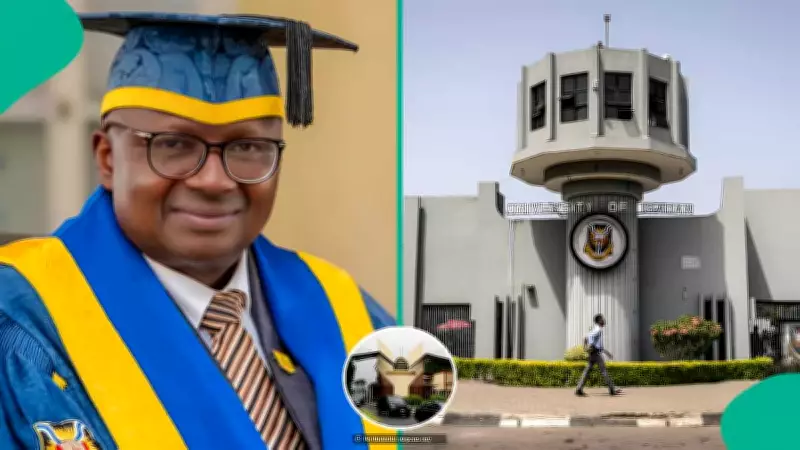
The Founding Stories of University of Ibadan and University of Lagos Explained
As the University of Ibadan (UI) and the University of Lagos (UNILAG) continue to shape Nigeria's future by producing brilliant leaders, it is essential to delve into their historical origins. This article provides a comprehensive overview of how these prestigious institutions were established, tracing their evolution from inception to their current status as globally recognized universities.
Historical Context of Nigerian Higher Education
Before and after Nigeria's independence, several higher institutions were established under various leaderships and in different years. Among these, UI and UNILAG stand out for their significant contributions to education and national development. Each institution has maintained global standards and consistently produced quality graduates who excel in various fields.
Brief History of the University of Ibadan (UI)
What is now known as the University of Ibadan (UI) began as the University College, Ibadan. Founded in 1948, it initially operated from a location called the 56th Military General Hospital. The university later relocated to a new site, leasing land from the people of Ibadan for 999 years. Equipment was sourced from Yaba Higher College, and the first students commenced their academic programs on January 18, 1948.
The formal opening occurred in March 1948, with London University establishing a special relationship scheme in February 1948. This arrangement led the then Secretary of State for the Colonies, Arthur Creech Jones, to designate November 17, 1948, as the official founding day. University College, Ibadan, transitioned into a full-fledged university in 1962.
Initially, UI offered few academic programs, including Arts, Science, and Medicine. Today, it has expanded to include faculties such as Arts, Science, Basic Medical Sciences, Clinical Sciences, Social Sciences, Education, Veterinary Medicine, Pharmacy, Technology, Law, Public Health, Dentistry, and Economics. The university also features numerous academic units, halls of residence for students, and accommodations for staff.
UI provides bachelor's, master's, and postgraduate programs, graduating an average of 3,000 students annually, according to its website. This growth underscores its role as a cornerstone of Nigerian higher education.
Brief History of the University of Lagos (UNILAG)
The University of Lagos (UNILAG) was established in 1962 to address the growing need for a professional workforce and competent individuals to contribute to Nigeria's development. It was created by an act of the federal parliament, specifically Act No. 11 of 1962. The first students were admitted on October 22, 1962, and the university has since become one of Nigeria's most popular institutions, alongside UI and others.
The law establishing UNILAG provided for an eleven-member provisional council, a Senate to oversee academic affairs, and a separate council for the medical school. Over the years, UNILAG has had several Vice-Chancellors, with the current one being Professor Folasade Ogunsola, OON, FAS, the first female Vice-Chancellor.
UNILAG operates across three campuses: the main campus in Akoka, the School of Radiography in Yaba, and the College of Medicine in Idi-Araba. Starting with few faculties, it now boasts about 12 faculties, including Arts, Basic Medical Sciences, Clinical Sciences, Dental Sciences, Education, Engineering, Environmental Sciences, Law, Management Sciences, Pharmacy, Science, and Social Sciences. The university also includes various colleges and facilities, supporting its mission to deliver quality education.
Legacy and Impact of UI and UNILAG
Both UI and UNILAG have evolved significantly since their founding, adapting to educational demands and technological advancements. They continue to uphold high academic standards, contributing to Nigeria's intellectual and economic growth. Their histories reflect a commitment to excellence, innovation, and the development of future leaders who drive progress in various sectors.
As these institutions celebrate their milestones, they remain pivotal in shaping the educational landscape of Nigeria, inspiring students and alumni alike to achieve remarkable feats in their careers and communities.