Decades of Violence: Plateau State's Tragic Death Toll Revealed
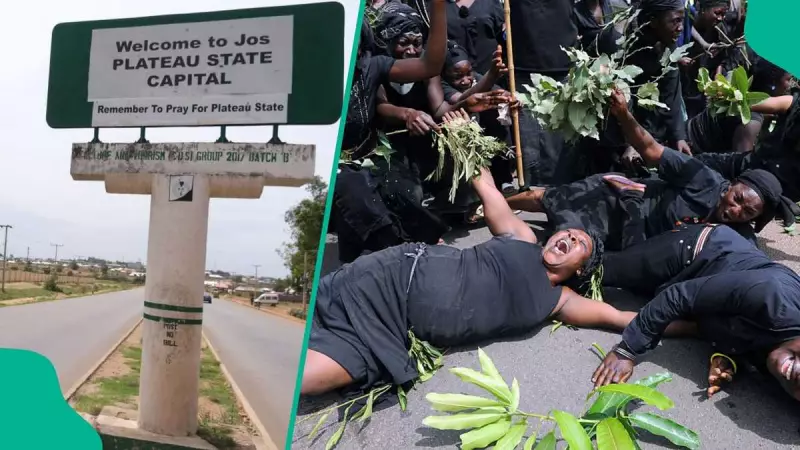
Plateau State has witnessed the tragic loss of nearly 12,000 lives between 2001 and May 2025, according to shocking statistics disclosed by Governor Caleb Mutfwang. The governor also revealed that more than 420 communities suffered brutal attacks during this nearly 25-year period of sustained violence.
Official Disclosure at Senate Security Hearing
The devastating figures were made public on Thursday, November 27, 2025, during the North-Central Zonal Public Hearing of the Senate Ad-Hoc Committee on the National Security Summit held in Jos. Governor Mutfwang, represented by his Deputy, Ngo Josephine Piyo, presented the grim statistics to federal lawmakers, security experts, and civil society representatives.
"These attacks are not isolated incidents," the Governor stated. "They are deliberate, coordinated, and sustained by actors pursuing economic, political, territorial, and religious interests."
Humanitarian Crisis and Economic Devastation
The prolonged violence has created a severe humanitarian crisis across Plateau State. Governor Mutfwang lamented that waves of violent incursions have resulted in mass displacement, systematic land grabbing, and widespread destruction of farmlands, leaving countless families without homes or means of livelihood.
"The insecurity has stripped many of our communities of their cultural heritage and economic stability," he emphasized during his presentation.
The Governor also raised alarm about criminal networks exploiting mining sites throughout the state. He warned that proceeds from illegal mining operations are being used to acquire arms and drugs, despite ongoing enforcement efforts by security agencies.
Constitutional Responsibilities Questioned
Governor Mutfwang expressed serious concerns about whether all levels of government are fulfilling their constitutional mandate under Section 14(1) of the 1999 Constitution, which places the security and welfare of citizens at the core of governance.
"It is time to stop comparing casualty figures across ethnic or religious divides. It is time to unite, join hands, and confront this menace collectively," he cautioned, calling for unified action against the security challenges.
Growing Calls for Security Reforms
The Senate public hearing brought together diverse stakeholders including traditional rulers, security experts, and community representatives to address the region's escalating insecurity. Senator Abba Moro, who led the North-Central delegation, emphasized the importance of capturing "grassroots perspectives" on security threats affecting both rural and urban areas.
Senator Moro identified multiple drivers of insecurity in Nigeria, including: economic deprivation, porous borders, youth unemployment, environmental degradation, and unresolved historical grievances.
He assured participants that "your submissions today will guide legislative interventions, influence budgetary decisions, and shape policy reforms towards strengthening national security."
Civil Society Demands Concrete Action
The Plateau Initiative for Development and Advancement of the Natives (PIDAN), represented by Dara Gyang Dudu, presented detailed data documenting repeated attacks across multiple communities including Irigwe, Mupun, Mwaghavul, and Bokkos.
PIDAN advocated for several critical measures:
- Protection of native land rights
- Mutual respect between settlers and host communities
- Strict adherence to constitutional guarantees of religious freedom
Rights advocate Reverend Gideon Para-Mallam strongly advocated for the decentralization of Nigeria's security structure, proposing a layered security architecture involving national, state, local government, and community policing levels.
He also pressed for a comprehensive national resettlement programme for internally displaced persons and the criminalization of land grabbing activities.
Military Perspective on the Crisis
In related developments, the Nigerian Army had previously identified community self-defense measures as a factor fueling the crisis in Plateau State. Major General MA Etsy-Ndagi, Chief of Civil-Military Relations, stated that communities defending themselves haven't yielded positive results but instead worsened the security situation.
The staggering death toll and widespread community attacks highlight the urgent need for comprehensive security reforms and sustainable peacebuilding initiatives in Plateau State and across Nigeria's Middle Belt region.