Nigeria's Deepening Security Crisis Demands Immediate Action
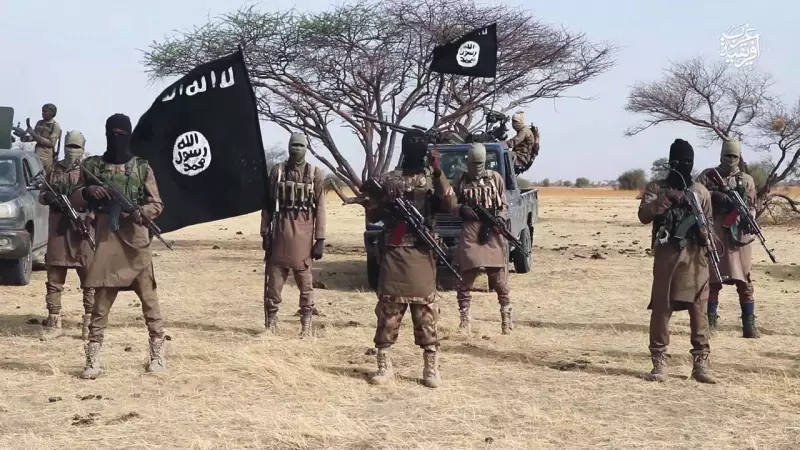
The security situation in Nigeria has reached a critical point where community leaders in Charanchi and Batagarawa council areas of Katsina State were recently compelled to enter into peace agreements with terrorist groups. During these disturbing meetings, the armed militants boldly accused the government of being responsible for the ongoing insurgency.
One terrorist representative declared, If the government wants all this insecurity to end, they have the power to end it, but they don't want it to end. We don't have the power or wisdom to bring peace to the country, except through the Nigerian government, because everything is under their control.
Government Inaction and Complicity Concerns
The government's response to terrorism continues to lack the decisive action needed to eliminate this threat. There are growing concerns that the administration's hesitation suggests possible complicity. Despite clear evidence that terrorists receive support from sponsors both within and outside government circles, authorities have failed to act on intelligence provided by foreign governments regarding suspected financiers.
The current amnesty program for terrorists is fundamentally flawed and doesn't follow global best practices. Proper deradicalization must be verified by experts before terrorists can be considered genuinely reformed. Statistics reveal that the Operation Safe Corridor initiative, used by the military to process returning terrorists, contains significant weaknesses that allow dangerous errors.
Military personnel have expressed distrust in working with supposedly reformed terrorists, while communities consistently reject the return of former militants to their homes. This trust deficit becomes particularly concerning when considering that many hardened terrorists aren't even Nigerian citizens, and the loyalty of their Nigerian counterparts remains questionable.
The Failed State Reality and Political Responsibility
The political class must recognize their fundamental responsibility to secure the nation. Warnings that Nigeria could become a failed state if good governance isn't prioritized over mediocre performance remain as relevant today as when first issued years ago. The indicators of state failure are now visible throughout the country.
When terrorists can openly hold meetings in daylight while government authorities look the other way rather than confronting them, it signals both weakness and possible complicity. The upcoming 2027 general elections cannot serve as an excuse for the current administration's passive approach to security matters. Playing politics with national security is equivalent to playing with fire - there must first be a secure country for elections to have meaning.
President Bola Ahmed Tinubu must demonstrate genuine commitment to leaving Nigeria in better condition than he found it. The nation is rapidly deteriorating, and he has a constitutional duty to pull it back from the brink. The political elite must stop prioritizing self-preservation over national survival.
Military Challenges and the Path Forward
The newly appointed Service Chiefs must mobilize security forces to definitively end terrorism. This requires taking the battle directly to insurgents and their supporters, eliminating them permanently. Terrorists cannot be permitted to hold the nation or any part of it hostage.
President Tinubu's charge to the Service Chiefs emphasized the urgency: We cannot allow the crisis that began in 2009 to persist any longer. I charge you, as heads of our nation's armed forces, to carry out your duties with patriotic zeal. Nigerians expect results, not excuses. He further urged innovation, pre-emptive action, courage, and technological deployment.
Unfortunately, Nigeria's peace has already been violated, not merely threatened. The appointment of new Service Chiefs shouldn't become just another ceremonial changing of guards, but rather an opportunity to fulfill the government's most critical constitutional responsibility: safeguarding territorial integrity.
The 1999 Nigerian Constitution explicitly states that security and welfare of citizens represent the primary purposes of government. Given the frequent ambushes of Nigerian troops and alleged counter orders suddenly given to soldiers on anti-terrorism missions, the government must identify potential saboteurs within security apparatus and create safe operational environments for military personnel.
Numerous accounts of internal sabotage continue to complicate counter-insurgency efforts. Nigeria has lost approximately 2,700 soldiers fighting terrorism over twelve years - an unacceptable toll that cannot continue. Technological deployment should help reduce human casualties.
The insurgency has persisted far too long, significantly degrading military capacity. With at least 350,000 civilians killed by terrorists over the years, human life must be valued appropriately. The nation has spent trillions of Naira combating this menace while nearly four million people remain in internally displaced persons camps nationwide.
Farmers have abandoned communities and agricultural land to terrorists, creating severe food security implications. The recent terrorist threat to bomb the National Assembly should be taken seriously given their history of brutal atrocities.
The military must be properly equipped to complete their mission against terrorists who have decapitated entire families, including women and children. These criminals deserve no mercy, and none should be granted. Nigeria must cease playing politics with insecurity - the nation transcends group interests and geopolitical sentiments.
With global attention focused on Nigeria due to years of uncontrolled terrorism, the country has no time for frivolities. The government must deal decisively with terrorists and their supporters, regardless of how remotely connected. No government program, whether political or economic, matters more than eliminating terrorism from the nation.
The Service Chiefs must use their tenure to create meaningful change - it cannot be business as usual.