
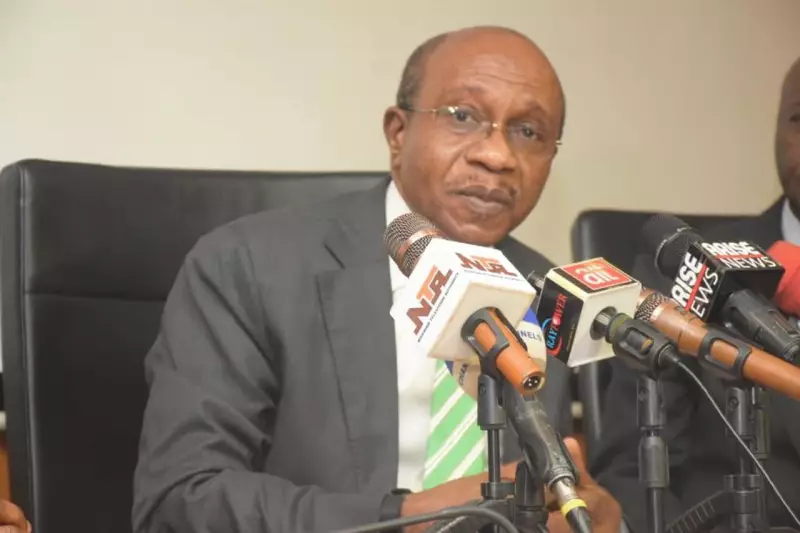
Former Central Bank of Nigeria deputy governor Kingsley Moghalu has launched a scathing critique against ex-CBN governor Godwin Emefiele, describing his leadership as disastrously incompetent and accusing him of being a political puppet rather than an independent central banker.
Political Poodle Rather Than Real Banker
In a detailed post on his X account, Moghalu did not mince words about Emefiele's tenure, stating that the former governor's actions significantly contributed to Nigeria's current economic difficulties. According to Moghalu, Emefiele showed more interest in pleasing political masters than maintaining the crucial independence of Nigeria's apex bank.
The notion of central bank independence was utterly foreign to him, Moghalu emphasized in his social media analysis. He painted a picture of complete subservience to former President Muhammadu Buhari's administration, dramatically noting that all the presidency had to say was 'jump' and Emefiele would ask 'How high?'
The Downfall: Challenging His Chi
Drawing from Chinua Achebe's classic novel 'Things Fall Apart', Moghalu compared Emefiele's eventual downfall to the fate of Nza the little bird who challenged his chi to a wrestling match. The political economist highlighted that Emefiele's attempt to transition from the Central Bank directly to the presidency without resigning from public service marked his ultimate undoing.
Emefiele's suspension came in June 2023, shortly after President Bola Tinubu assumed office. The former CBN governor faced immediate arrest by the Department of State Services and has been charged with multiple offenses including alleged abuse of office, money laundering, and financial impropriety.
Contrast With Competent Leadership
Moghalu, who served at the CBN from 2009 to 2014, contrasted Emefiele's performance with that of former finance minister Ngozi Okonjo-Iweala, whom he described as having performed superlatively due to her professional competence and personal gravitas.
According to Moghalu, Okonjo-Iweala's pedigree and experience made it difficult for politicians to dominate her, unlike Emefiele who willingly surrendered the Central Bank's independence. The former deputy governor argued that effective economic management requires both a strong, independent central bank and an influential finance ministry to restrain politicians' appetite for excessive borrowing and profligate spending.
Moghalu's comments emerged as part of a broader analysis of economic management across Africa, where he observed that central banks generally outperform finance ministries due to their statutory independence from political interference. However, he noted this independence means little when central bank governors choose to become tools of political leaders.
Politicians in Africa tend to view central bank independence with great suspicion and unease, Moghalu observed, noting that many African leaders prefer institutions under their direct control rather than independent entities that might challenge their economic decisions.




