
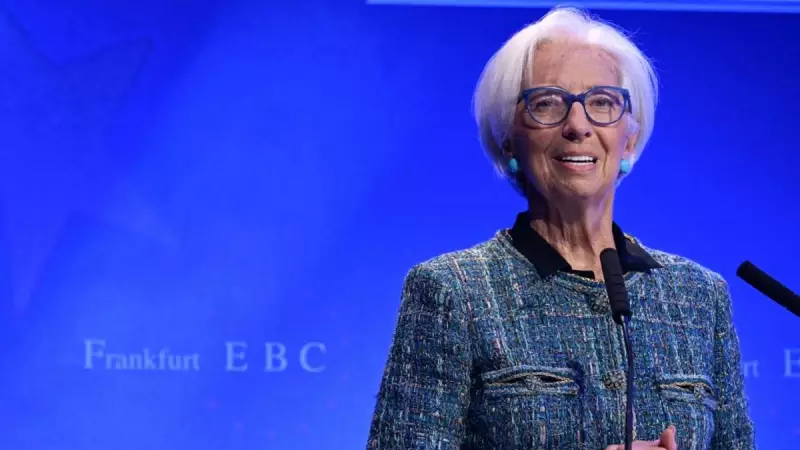
European Central Bank President Christine Lagarde delivered a stark warning on Friday, November 21, 2025, stating that Europe has become increasingly vulnerable to global economic shocks and is falling behind in critical growth areas like artificial intelligence.
Europe's Growing Vulnerability to External Shocks
Speaking at a banking conference in Frankfurt, the head of the eurozone's central bank highlighted multiple threats facing the continent's economy. Lagarde pointed specifically to Europe's "dependency on third countries for our security and the supply of critical raw materials" as a major concern.
The ECB chief identified several immediate challenges impacting European stability, including rising US tariffs, Russia's ongoing invasion of Ukraine, and intensifying competition from China. These external pressures have exposed weaknesses in Europe's traditional economic model that can no longer be ignored.
Stagnation in Key Growth Sectors
While global competitors advance rapidly, Lagarde noted that Europe's domestic market has "stood still," particularly in sectors crucial for future economic expansion. The digital sector and artificial intelligence were specifically mentioned as areas where Europe is lagging behind other major economies.
This stagnation comes despite Europe's historical reliance on exports of manufactured goods including automobiles, factory equipment, and pharmaceutical products to drive economic growth. Lagarde emphasized that this export-led growth model is no longer functioning effectively in the current global landscape.
Call for Urgent Reforms and Integration
Faced with weak demand for key exports, structural challenges, and recent US tariff measures, European growth has remained muted in recent years, significantly trailing behind both the United States and China.
Lagarde outlined a comprehensive reform agenda to strengthen the region's economic position, including:
- Better integration of financial sectors across member states
- Reduction of trade barriers within the European Union
- Simplification of EU decision-making processes
The ECB president stressed that developing a stronger domestic economy would provide "a source of resilience in an uncertain world" for European nations.
Lagarde issued a sobering warning about the consequences of inaction, stating that more years of "lost growth, lost productivity, would not just be disappointing for future generations, it would be irresponsible on our part."
She expressed confidence that with radical reforms, Europe could ensure it remains strong and avoids becoming "the victim of decisions being made outside of this region."




