
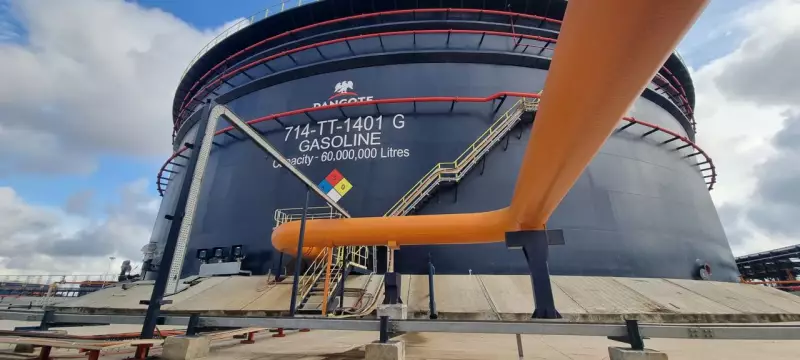
Dangote Refinery has strongly rejected allegations that it exported off-specification diesel to European markets, following reports that international buyers were avoiding its shipments due to quality concerns.
The Quality Controversy Unfolds
According to a report by Argus Media, multiple European and Nigerian market sources found the refinery's diesel unsuitable for winter conditions in northern Europe. The concerns centered around cloud point failures, higher-than-permitted sulphur levels, and inability to meet premium German winter standards.
Anthony Chiejina, the company's spokesman, dismissed these suggestions as misleading. He clarified that the refinery does not manufacture winter-grade diesel and has never offered such products to European buyers.
"Diesel supplied to Europe has seasonal specifications – winter, summer, spring and autumn. We do not produce winter diesel; it is not part of our portfolio," Chiejina stated emphatically.
Technical Specifications Under Scrutiny
Market sources who spoke to Argus revealed that European traders were reluctant to purchase Dangote's diesel because samples failed to meet winter requirements. One European distillates trader who reviewed a diesel sample dated November 16 reported concerning findings.
The product recorded a cloud point of +8°C, significantly above Germany's winter requirement of -7°C. The same sample showed sulphur content of 36ppm, much higher than the 10ppm European standard. However, the specific gravity of 0.8395 was within Dangote's stated export range, and the cetane number of 57.5 exceeded Europe's requirement of 51.
Another trader noted that blending the diesel with jet fuel to improve its cold-weather properties was unlikely to succeed due to sulphur content limitations. They suggested that if the cold filter plugging point (CFPP) were the only issue, Dangote would have been exporting regularly, as CFPP problems could typically be addressed with additives.
Market Shifts and Regional Impact
With Europe reducing interest in the refinery's output, West Africa has become the primary destination for Dangote's diesel and gasoil shipments. According to Kpler data, Nigeria has taken approximately 25,000 barrels per day, followed by Ghana with 14,000 b/d and Togo with 7,000 b/d.
The region now accounts for 97 per cent of the refinery's total seaborne diesel and gasoil exports this year. Even within Nigeria, some industrial buyers remain cautious, preferring diesel with a specific gravity of 0.8400 and above because it burns more slowly.
The refinery, which began operations late last year, has announced ambitious plans to ramp up its capacity to 1.4 million b/d by 2028. At that stage, Dangote says it will begin producing winter-grade diesel and upgrade its fuels to Euro VI standards, aligning fully with the highest global benchmarks.




