
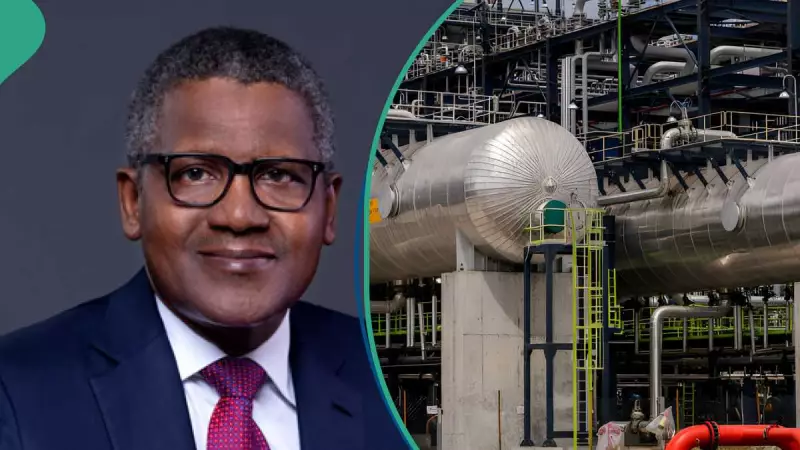
In a surprising market reversal, Dangote Petroleum Refinery has increased its petrol prices barely days after implementing a significant reduction, creating new uncertainty in Nigeria's downstream petroleum sector.
Price Reversal Shakes Market Stability
The refinery raised its ex-depot price by N32 per litre, moving from the recently celebrated rate of N828 per litre to N860 per litre according to data from PetroleumPriceNG. This sudden change comes only a few days after the facility had reduced prices from N887 per litre, demonstrating the volatile nature of Nigeria's deregulated fuel market.
Industry experts immediately pointed to global crude oil fluctuations and ongoing exchange rate pressures as primary drivers behind the price adjustment. The refinery's pricing model, which follows import parity principles, factors in crude oil costs, international freight rates, and local logistics expenses.
Depot Operators Follow Dangote's Lead
Following the refinery's price announcement, petroleum depot operators across Nigeria have synchronized their pricing in response. Average depot prices have now climbed to approximately N888 per litre, creating a near-uniform industry adjustment to the refinery's new rate.
This development confirms Dangote Refinery's growing influence over market dynamics, with depot owners having previously expressed concerns about frequent price changes disrupting market stability and profitability. Some operators had even suspended petrol imports due to the unpredictability of Dangote's pricing strategy.
Imports Become Economically Unviable
The economic landscape for fuel imports has dramatically shifted according to industry leaders. Clement Isong, Executive Secretary of the Major Oil Marketers Association of Nigeria (MOMAN), explained that the combination of Dangote's pricing and the Federal Government's 15% import tariff has made importing petrol unprofitable compared to purchasing locally refined products.
"It would stop imports now, definitely, since imports are higher than Dangote's price. That is the logical thing," Isong stated. He further elaborated that the refinery's gantry price of N828 per litre had maintained stability until market conditions necessitated an upward adjustment to prevent financial losses.
Potential Fuel Shortages Loom
Not all industry stakeholders view the import reduction positively. The Petroleum Products Retail Outlets Owners Association of Nigeria (PETROAN) has raised concerns about possible fuel scarcity resulting from decreased imports.
PETROAN President Billy Gillis-Harry warned that local refining currently meets only 30-35% of national demand, making imported petrol crucial for maintaining market stability. "If imports stop, product unavailability will increase. Dangote's production alone can't meet national demand," he emphasized.
Gillis-Harry also highlighted operational challenges at Dangote's facility, noting that some marketers have paid for supplies but experienced significant loading delays. He urged the Federal Government to reconsider the 15% import tariff to prevent a nationwide supply crisis.
The price increase represents another chapter in Nigeria's ongoing transition toward a fully deregulated petroleum market, where global crude prices and currency exchange rates directly impact what consumers pay at filling stations across the country.




