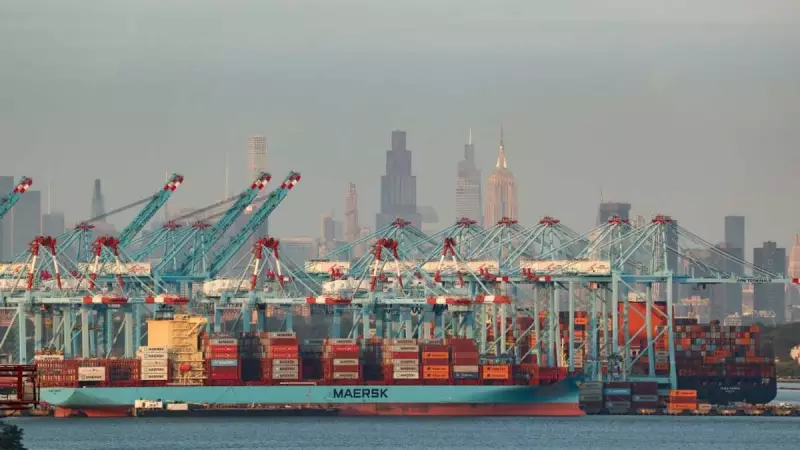
Newly released government data has revealed a significant decline in United States imports during August 2025, directly coinciding with the implementation of fresh tariff measures by President Donald Trump's administration.
Delayed Data Reveals Import Slump
The economic report, which was delayed due to a record 43-day government shutdown that ended last week, shows imports declined by 5.1 percent to $340.4 billion in August. The data publication pause affected various federal economic statistics, including inflation numbers and retail sales figures.
According to the report, the overall US trade deficit narrowed more than analysts had anticipated, reaching $59.6 billion during the month. This contraction was primarily driven by a notable decrease in goods imports, which fell by $18.6 billion.
Tariff Impact on Trade Flows
Meagan Schoenberger, a senior economist at KPMG, confirmed that "new trade policy changes came online in August," referring to tariff increases targeting dozens of US trading partners. She noted that "wholesalers drained inventories to compensate for lower imports" as businesses adjusted to the new trade landscape.
The sectors most affected by the import pullbacks included:
- Industrial supplies and materials
- Consumer products
- Various goods categories
While imports saw a substantial decline, exports experienced a marginal increase of 0.1 percent to $280.8 billion, largely due to an uptick in services exports. However, the value of goods exports similarly decreased during the period.
Ongoing Trade Uncertainty
Trade flows have experienced significant volatility throughout the year as a result of President Trump's rapidly changing tariff policies. Importers had previously rushed to stock up on inventory ahead of planned duty increases, creating unusual patterns in trade data.
Schoenberger warned that "we expect continued uncertainty because of ongoing legal challenges and trade negotiations." She highlighted that the United States still has numerous national security-related investigations underway that could lead to additional tariffs, along with potential exemptions in the pipeline.
These developments "could lead to new rounds of stocking up and draining inventories," creating further instability in trade patterns, the economist added.
Since returning to the presidency, Trump has imposed fresh duties on various economies, including so-called "reciprocal" tariffs on virtually all US trading partners. The administration has justified these measures as responses to practices that Washington deems unfair.
The trade tensions have been particularly acute with China, where tariff rates reached prohibitive triple-digit levels in April, significantly disrupting trade flows between the world's two largest economies.
Among specific countries, the US goods deficit with both Canada and China shrank during August, reflecting the broader trend of reduced import activity across multiple trading relationships.