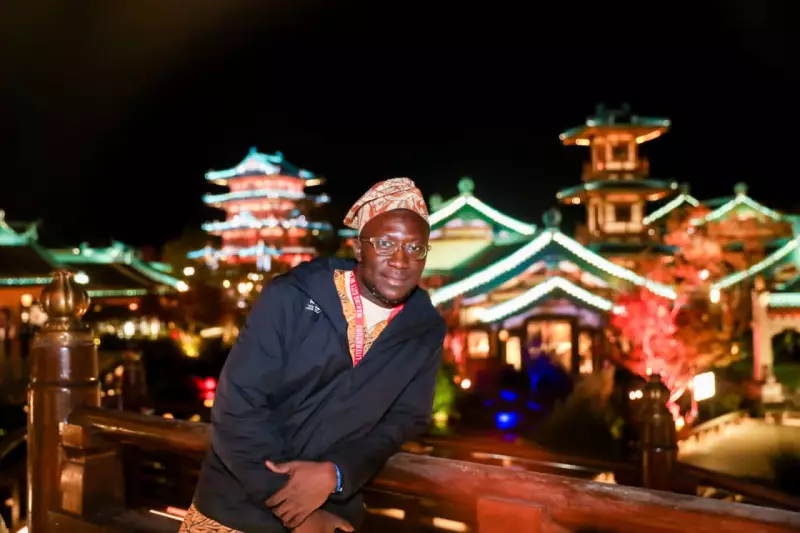
Nigerian Ifa scholar and filmmaker Ayankola Ayanwuyi has taken a prominent position on the world stage, leading a significant dialogue on heritage innovation at a UNESCO-organized international forum in China. This appearance comes shortly after his widely discussed commentary clarifying that the Yoruba deity Esu is not synonymous with Satan.
Global Platform for Yoruba Ancestral Knowledge
Ayankola Ayanwuyi, the founder of the Dundun Centre in Ogbomoso, was one of only 40 international youth delegates invited to the International Forum on Creativity and Heritage along the Silk Roads. This major gathering, which took place from 16 to 22 November, was hosted across the Chinese cities of Nanjing and Changsha.
The event assembled 80 participants from 39 countries, alongside Chinese representatives, with a core mission to explore how digital innovation can be harnessed to strengthen the preservation of cultural heritage worldwide. It was organized by a powerful consortium comprising UNESCO, the National Commission of China for UNESCO, and the World Federation of UNESCO Clubs, Centres and Associations (WFUCA).
Decoding Ifa for Modern Problem-Solving
Ayanwuyi delivered one of the forum's most talked-about sessions, titled “Decoding Ancestral Wisdom for Innovation Using Ifa as a Case Study.” In his powerful presentation, he moved beyond common perceptions, arguing that the Yoruba Ifa system is not merely a divination tool but a sophisticated intellectual framework with profound relevance for contemporary challenges.
He positioned indigenous knowledge systems as living repositories of insight that can guide global problem-solving in areas like education, governance, science, and technology. “Indigenous knowledge systems like Ifa offer timeless wisdom for solving today’s global challenges,” Ayanwuyi told the international audience. He further emphasized that “Every indigenous group possesses what they need to survive and thrive when they engage their own systems.”
Bridging Heritage and the Future
The scholar's work through the Dundun Centre actively explores how African heritage can be documented, taught, and applied using modern tools. The centre provides access to oral traditions, visual archives, and cultural resources, effectively bridging traditional learning with digital innovation.
At the forum, Ayanwuyi also reflected on the historical division of the Yoruba people across national borders following the 1884–1885 Berlin Conference. He stressed the critical importance of reconnecting this shared heritage across West Africa, noting that cultural continuity is central to regional cohesion.
His participation aligns with broader international initiatives, including the Global Civilization Initiative (GCI) and the UN Summit of the Future’s Pact for the Future, both of which champion youth-led and culturally rooted responses to contemporary issues. For Ayankola Ayanwuyi, the ultimate goal is to ensure heritage becomes an active tool for innovation, positioning African ancestral knowledge as a vital contributor to global progress.