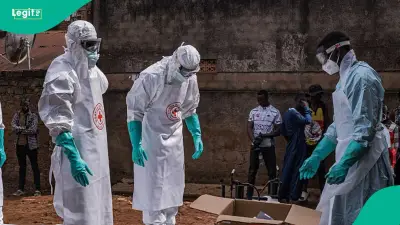
Medical humanitarian organization Médecins Sans Frontières (MSF) has significantly scaled up its response to the worsening diphtheria outbreak across several northern Nigerian states, as reported cases continue to climb alarmingly.
Rising Case Load Overwhelms Health Facilities
According to recent statements from MSF, the organization has been collaborating with state health authorities since August 2025 to manage the increasing number of diphtheria infections. Reports from Disease Surveillance and Notification Officers indicate that treatment centers are facing substantial pressure, while significant gaps in vaccination coverage and access to essential medicines have become apparent.
The Nigeria Centre for Disease Control and Prevention (NCDC) describes diphtheria as a serious bacterial infection affecting the nose, throat, and sometimes skin. The disease can manifest as laryngitis, pharyngitis, or tonsillitis, characterized by an adherent membrane in the airways. Alarmingly, the NCDC warns that approximately a quarter of cases may develop myocarditis, requiring treatment with antibiotics and diphtheria antitoxin.
National data reveals the alarming scope of the outbreak, with 43,743 suspected cases recorded across 37 states and 360 local government areas between May 2022 and May 2025.
State-Specific Response Efforts Intensify
In Bauchi State, MSF-supported activities at the Diphtheria Treatment Centre within Abubakar Tafawa-Balewa University Teaching Hospital documented 295 admissions between late August and early November 2025. This surge prompted the establishment of an additional treatment center at a specialist hospital to accommodate more patients.
The situation in Kano State appears particularly dire. After MSF began supporting the state response in October, more than 2,300 patients had been hospitalized by the first week of November. A staggering 400 patients were admitted between October 6 and November 2 alone. The overwhelming patient volume at the Infectious Disease Hospital has forced medical teams to prioritize severe cases, while referring others to Aminu Kano Teaching Hospital.
Dr. Jerome Ntarima, MSF's Emergency Project Medical Referent, reported that many patients are arriving with complications, stating: "The stories we are getting from these patients are that there are several mortalities from the communities they are coming from already."
Borno State has also seen significant transmission, with MSF teams conducting sensitization campaigns, community surveillance, and patient referrals. Between early July and late October 2025, healthcare workers managed 2,553 suspected cases—1,651 through home-based care and 902 at the University of Maiduguri Teaching Hospital.
Critical Challenges and Urgent Calls to Action
MSF has identified several key factors hampering effective response to the outbreak:
- Inadequate vaccination coverage
- Limited access to diphtheria antitoxin
- Critical shortages of medical staff
- Gaps in disease surveillance systems
Dr. Halarou Assoumana, MSF's Medical Coordinator, emphasized the disease's deadly potential, noting: "Without treatment, it can kill half of the people infected. Even with access to care, the disease remains dangerous, and it is still fatal in five percent of patients."
The organization stresses that diphtheria represents a recurring challenge in Nigeria and has urged authorities and partner organizations to strengthen vaccination systems, improve availability of antitoxin and antibiotics, and invest in building a robust health workforce to prevent future outbreaks.