
Oil Interests Drive US Pressure on Venezuela, Says Colombian Leader
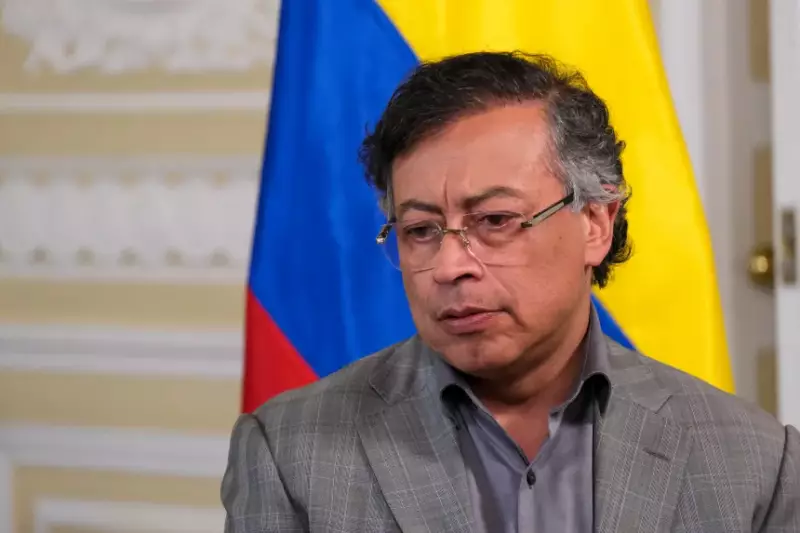
Colombian President Gustavo Petro has made explosive claims about the true motives behind the United States' escalating pressure campaign against Venezuela. In an exclusive interview with CNN, Petro asserted that access to Venezuela's massive oil reserves represents the core objective of American actions, rather than the publicly stated goal of combating drug trafficking.
"(Oil) is at the heart of the matter," President Petro declared during the interview, emphasizing that Venezuela possesses what are widely considered the largest oil reserves in the world. The Colombian leader provided a blunt assessment of US President Donald Trump's motivations, stating: "So, that's a negotiation about oil. I believe that is Trump's logic. He's not thinking about the democratization of Venezuela, let alone the narco-trafficking."
Questioning the Drug Trafficking Narrative
Petro challenged the fundamental premise of US justification for pressuring Venezuela, pointing out that the country doesn't rank as a major drug producer. According to his analysis, only a relatively small portion of global drug trafficking actually passes through Venezuelan territory.
The United Nations Office on Drugs and Crime (UNODC) data supports aspects of Petro's claims. Their research indicates that Venezuela does not qualify as a cocaine-producing nation. Of the 3,700 tons of coca produced worldwide, more than 2,500 tons originate from Colombia, with Venezuela notably absent from production maps.
US Drug Enforcement Agency investigators reached similar conclusions in their annual report published in March, noting that 84% of cocaine seized in the United States comes from Colombia rather than Venezuela.
Escalating Tensions Between Petro and Trump Administration
The relationship between President Petro and the Trump administration has grown increasingly strained in recent months. The Colombian leader has been outspoken in his criticism of multiple US policies, including immigration measures, support for Israel, and military activities throughout Latin America.
Petro accused the United States of attempting to impose its will on neighboring countries, drawing comparisons to imperialistic behavior. "The United States cannot be considered an empire, but one of the nations among others," the president stated during his CNN appearance.
The tensions have manifested in concrete actions against the Colombian leader. In September, the US State Department revoked Petro's visa after he publicly urged American soldiers to disobey President Trump and "not to point their rifles at humanity."
The situation escalated further in October when the US Treasury sanctioned Petro, accusing him of involvement in the global illicit drug trade—allegations the Colombian president has vehemently denied. These sanctions followed President Trump's announcement that he would halt all US payments and subsidies to Colombia, claiming Petro "does nothing to stop" drug production in his country.
Petro Defends His Administration's Record
In response to the accusations, President Petro defended his government's anti-drug efforts, asserting that his administration has seized more cocaine than any other in Colombian history. "So much so that in recent years, I have managed to ensure that the growth in crops, which is stagnating, is far surpassed by the growth in seizures," he told CNN.
When questioned about why President Trump hasn't acknowledged these achievements, Petro pointed to personal prejudice. "Because of pride. Because he thinks I'm a subversive thug, a terrorist, and things like that, simply because I was a member of the M-19," he explained, referencing the Colombian guerrilla movement active during the 1970s and 1980s.
Petro also suggested that the US administration is drawing parallels between him and Venezuelan President Nicolás Maduro. His comments came shortly after the United States designated the Cartel de los Soles—an alleged drug trafficking group that US authorities claim Maduro leads—as a foreign terrorist organization. Venezuela has consistently denied these allegations.
While acknowledging Maduro's democratic shortcomings, Petro expressed skepticism about the Venezuelan president's involvement in drug trafficking. "The problem of Maduro is called democracy … the lack of democracy," Petro told CNN, adding that "no Colombian investigation … has shown us a relationship between Colombian drug trafficking and Maduro."
US-Colombia Relations Remain Despite Leadership Clash
Despite the mounting tensions between the two national leaders, official relations between the United States and Colombia appear to remain intact. US Secretary of State Marco Rubio has clarified that the administration's disagreements are specifically with President Petro, not with Colombian institutions.
"Our relationships with the people of Colombia, the economic sector of Colombia, the majority of people in politics in Colombia, and their institutions, in particular their defense institutions, are strong and enduring, and they're going to be strong and enduring long after this individual is no longer the president there," Rubio previously stated.
As US military activity intensifies in both the Caribbean and Pacific regions, Petro's revelations shed new light on the complex geopolitical dynamics shaping American foreign policy in Latin America, with control over valuable energy resources emerging as a central factor in international relations.




