
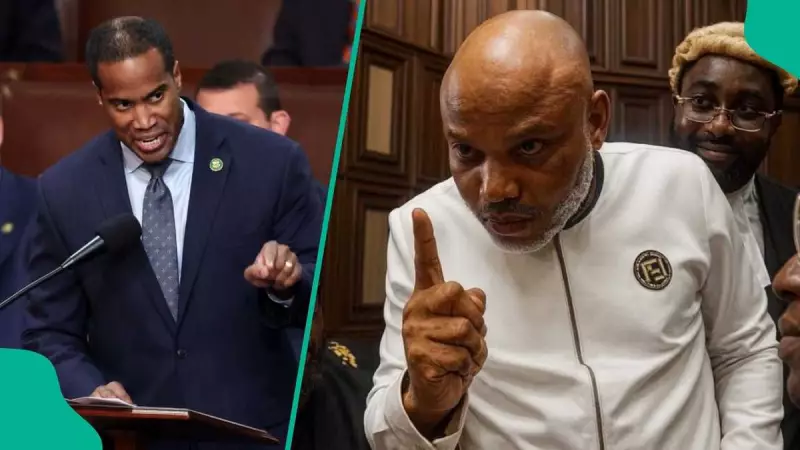
A senior United States Congressman and former chairman of the House Foreign Affairs Committee on Africa has raised alarm about what he describes as one of the world's most severe religious freedom crises unfolding in Nigeria, where Christians face systematic targeting, displacement, and killing because of their faith.
Mass Killings and Sustained Violence Pattern
The congressman presented disturbing statistics showing that since 2019, nearly 17,000 Christians have been killed in Nigeria, with hundreds more murdered during the first seven months of this year alone. He specifically referenced the Yellow Water massacre on June 13, where more than 280 Christians lost their lives in a single day of violence.
"These are not isolated tragedies but a sustained pattern of religiously motivated violence often ignored or even enabled by the Nigerian government," the congressman stated during his address. He identified extremist groups including Boko Haram, Fulani militants, and ISIS West Africa as continuing their attacks with minimal intervention from Nigerian authorities.
Political Repression Connected to Religious Persecution
The American lawmaker directly linked the religious persecution to political repression in Nigeria, citing the ongoing detention of Mazi Nnamdi Kanu as a prominent example. Despite a 2022 Court of Appeal ruling that ordered his release, and similar calls from the UN Working Group on Arbitrary Detention, Kanu remains in solitary confinement with reports of deteriorating health.
"Nigeria has signaled that the law is optional and targeting Christians is fair game," the congressman declared. He noted that Kanu was recently convicted on all charges despite widespread international pleas for his release, indicating a pattern of disregarding legal processes.
US Foreign Aid Under Scrutiny
The congressman raised serious concerns about continued US foreign assistance to Nigeria, noting that for fiscal year 2025, nearly eight billion dollars has been requested for sub-Saharan Africa, with Nigeria expected to receive significant portions of this funding.
He posed critical questions about this financial support: "Why should our tax dollars support governments that refuse to protect their own people? Is our aid aiding a genocide?" These questions reflect growing unease in Washington about the effectiveness and morality of foreign aid to countries facing severe human rights challenges.
The lawmaker concluded with a stark warning about Nigeria's future stability, emphasizing that "no country can build a stable future where churches are burned, believers are killed, and communities live in fear." He called for immediate action, urging that "the United States must stay engaged, and Nigeria must change course now" to address the escalating crisis.




