
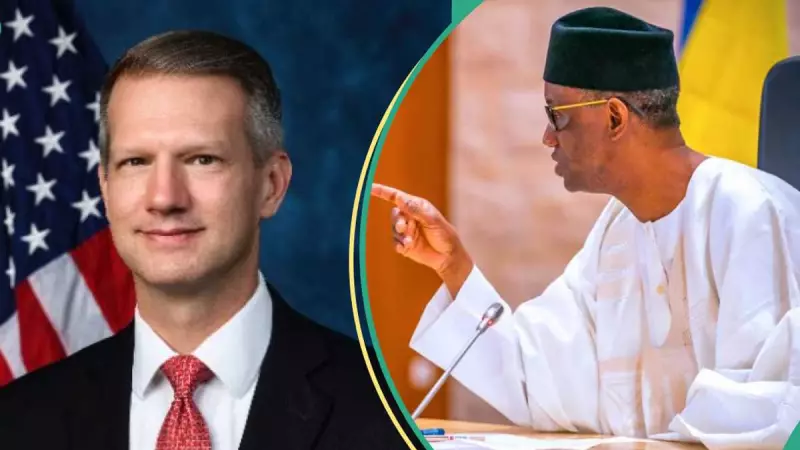
United States Congressman Riley M. Moore has held a crucial meeting with Nigeria's National Security Adviser Nuhu Ribadu and other senior government officials in Washington D.C. to address growing concerns about Christian persecution and terrorist threats in Nigeria.
High-Level Security Talks in Washington
The meeting took place on Wednesday, November 19, 2025, between Congressman Moore and the Nigerian delegation led by Mallam Nuhu Ribadu. The discussions focused on the alleged targeted violence against Christian communities and the ongoing terrorist activities by groups including Boko Haram, ISWAP, and Fulani militants.
In a statement shared via his X handle @RepRileyMoore, Congressman Moore emphasized that the United States expects tangible steps from Nigeria to protect Christians from violence, persecution, displacement, and death based on their religious beliefs.
US Demands Concrete Action
Congressman Moore stated clearly during the meeting that the US must see measurable progress in protecting Christian communities in Nigeria. He highlighted that the United States stands ready to cooperate with Nigeria in combating terrorism specifically targeting Christians in the Northeast and Middle Belt regions.
The Nigerian government has the opportunity to strengthen and deepen its relationship with the United States, Moore noted, adding that both President Trump and Congress are united in their resolve to end violence against Christians and destroy terrorist groups operating within Nigeria.
Comprehensive Nigerian Delegation
The Nigerian delegation included several high-ranking officials:
- Mallam Nuhu Ribadu - National Security Adviser and Delegation Leader
- Her Excellency, Bianca Ojukwu - Minister of State for Foreign Affairs
- Kayode Egbetokun - Inspector General of Police
- Chief Lateef Olasunkami Fagbemi, SAN - Attorney General of the Federation
- General Olufemi Olatunbosun Oluyede - Chief of Defence Staff
- Lt. Gen. EAP Undiendeye - Chief of Defence Intelligence
- Ms. Idayat Hassan - Special Adviser to ONSA
- Ambassador Ibrahim Babani - Director of Foreign Relations, ONSA
- Ambassador Nuru Biu - Acting CDA, Embassy of Nigeria
- Paul Alabi - Political and Economic Section, Embassy of Nigeria
Nigerian Citizens React to Meeting
The meeting has generated significant reactions from Nigerians on social media platforms. User @martinokorowu praised the government's proactive approach, stating that the diplomatic engagement shows a determined effort to resolve the crisis.
However, @neurodrdan from Northern Nigeria expressed that both Christians and Muslims live in constant fear of attacks from various insurgent groups. The user urged international partners to acknowledge religious killings in general rather than focusing exclusively on Christian persecution.
Another user, @OpssyLee, raised concerns about recent church attacks that occurred despite the high-level meetings, questioning the government's commitment to protecting citizens.
Background of Christian Persecution Claims
The meeting comes amid ongoing claims by religious leaders about systematic violence against Christians in Northern Nigeria. Reverend Ezekiel Dachomo of the Church of Christ in Nations (COCIN) has previously stated that he has conducted more than 70 mass burials due to targeted killings of Christians.
During an interview with Piers Morgan Uncensored, Dachomo shared tragic experiences of Christians being killed and burned in attacks across northern regions.
Meanwhile, the US House Subcommittee on Africa has been preparing for public hearings to review President Trump's redesignation of Nigeria as a Country of Particular Concern. President Tinubu's administration has consistently rejected claims of widespread Christian persecution, maintaining that Nigeria upholds constitutional guarantees of religious freedom.
The outcome of this high-level meeting could significantly impact US-Nigeria relations and determine future cooperation in addressing security challenges and human rights concerns in the country.




