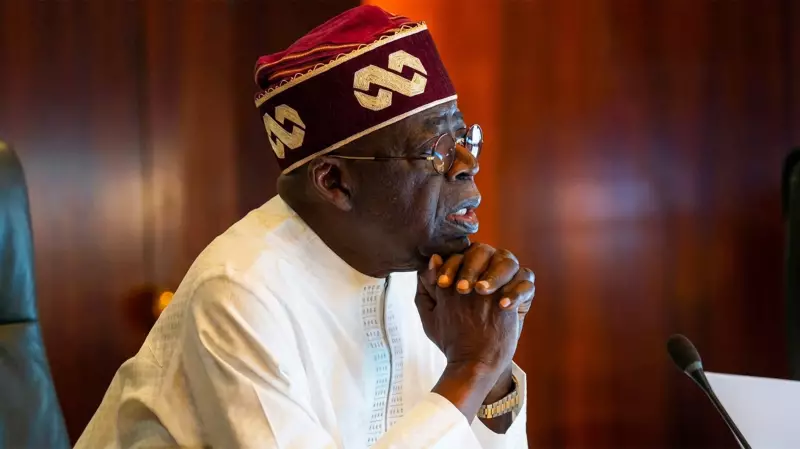
President Bola Tinubu has declared a nationwide security emergency and thrown his weight behind the establishment of state police, marking a significant shift in Nigeria's security architecture as the country grapples with escalating violence and mass abductions.
Unprecedented Security Measures Announced
In a decisive response to the worsening security situation across Nigeria, the Federal Government has announced sweeping emergency measures. President Tinubu, through a State House statement, revealed plans for massive recruitment into the armed forces and police, while endorsing state-level security initiatives.
The President declared that his administration will support state governments that have established security outfits to protect their citizens from terrorists. He specifically called on the National Assembly to review existing laws to permit states requiring police forces to establish them, signaling a major policy shift toward decentralized security governance.
Southern Leaders Unite on Security Framework
The presidential announcement came as Southern governors and traditional rulers held a crucial joint meeting in Iperu-Remo, Ogun State, where they unanimously endorsed state police as a constitutional imperative. The Southern Governors' Forum and Southern Nigeria Traditional Rulers Council emphasized that the success of community-based security outfits underscores the urgent need for decentralized policing.
The forum resolved to enhance regional security structures through equipment provision, logistics support, and operational backing for local security units. Member states agreed to contribute to dedicated zonal security funds and establish monthly coordination meetings among security advisers. They also adopted an intelligence-sharing framework supported by modern communication equipment for real-time monitoring across state lines.
Comprehensive Security Overhaul
President Tinubu's emergency declaration includes concrete actions: the police will recruit an additional 20,000 personnel, bringing the current recruitment cycle to 50,000. NYSC camps will be converted into temporary training facilities, while officers withdrawn from VIP protection duties will undergo crash retraining before deployment to troubled areas.
The Department of State Services received authorization to deploy trained forest guards and recruit additional operatives to flush out terrorists from forest hideouts. There will be no more hiding places for agents of evil, the President warned, describing the situation as a national emergency requiring coordinated action.
The President commended security forces for recent successes in securing the release of 24 abducted schoolgirls in Kebbi State and 38 kidnapped worshippers in Kwara State, while acknowledging ongoing efforts to rescue remaining hostages, including students abducted in Niger State.
Regional Security Concerns and Responses
Aare Ona Kakanfo of Yorubaland, Iba Gani Adams, urged South-West governors to establish a Community Security Network, warning that terrorists are attempting to infiltrate the region through Idoani in Ondo State and Iyamoye forest in Ekiti State. He proposed recruiting 300 security personnel across the region at an estimated cost of N40 million monthly.
However, the Yoruba Ronu Leadership Forum criticized the Southern Governors' Forum meeting, accusing it of lacking national focus and exhibiting divisive tendencies. The group argued that the current Southern governors have failed to demonstrate the cohesive, nationalistic approach shown during former Governor Rotimi Akeredolu's leadership.
Meanwhile, former Chief of Defence Staff General Martin Luther Agwai cautioned that military power alone cannot secure Nigeria, emphasizing the need for stronger economic capacity, technological advancement, and effective leadership. He expressed shock at recent attacks in Kebbi, Niger, and Kwara states, calling for comprehensive solutions beyond military engagement.
Traditional Rulers Back Tinubu Administration
The Southern Nigeria Traditional Rulers Council, led by Permanent Chairman and Ooni of Ife Oba Enitan Adeyeye Ogunwusi, passed a vote of confidence in President Tinubu. The monarchs emphasized their strategic position as grassroots leaders in supporting government security efforts and called for all hands on deck in fighting criminality.
The security council in Osun State also convened to review existing arrangements and draft new measures against local and external threats, with Deputy Governor Kola Adewusi presiding over the meeting attended by all service commanders.
President Tinubu advised state governments to reconsider siting boarding schools in remote locations without adequate security and urged religious institutions in vulnerable areas to seek regular police protection. On farmer-herder conflicts, he appealed to pastoral groups to embrace ranching and surrender illegal weapons, promising Federal Government partnership with states to resolve the crisis.