
Gender rights advocates and stakeholders have issued a powerful demand for Nigeria's National Assembly to pass legislation guaranteeing reserved seats for women in governance. This urgent call comes alongside the revelation of shocking statistics on violence against women, which activists directly link to women's exclusion from political leadership.
Alarming Statistics on Violence Against Women
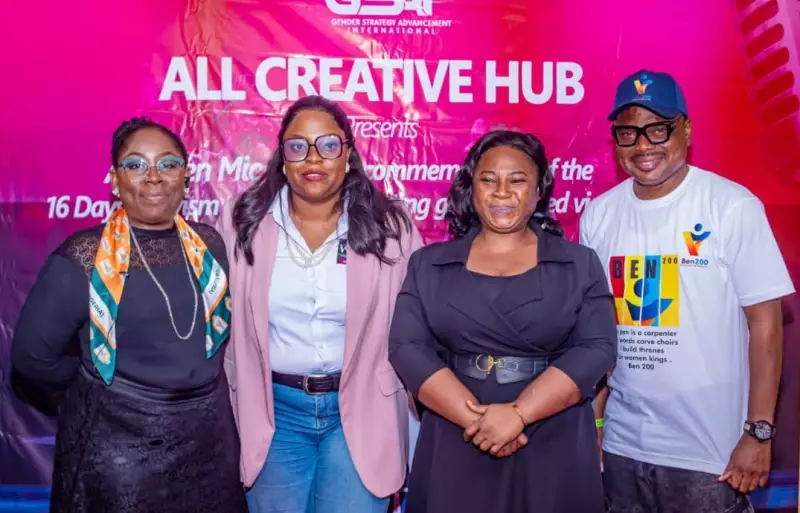
The compelling appeal was made during the Women of Words (WOW) 2023 – All Creatives Hub event organized by Gender Strategy Advancement International (GSAI) in Abuja. Under the theme "Unreserved for Reserved Seats: The Role of Women in Policymaking Towards Ending GBV," participants disclosed that 36 per cent of married women in Nigeria are survivors of intimate partner violence.
Even more staggering is the statistic that 96 per cent of Nigerian women aged 15 to 49 have experienced some form of physical or sexual violence. These alarming figures emerged as federal lawmakers prepare to deliberate on the Reserved Seats for Women Bill (HB1349), a landmark proposal designed to boost women's political representation and strengthen institutional responses to gender-based violence.
Political Exclusion Fuels Systemic Violence
Adaora Sydney-Jack, Executive Director of GSAI, emphasized that the disturbing rate of intimate partner abuse underscores the critical need for political reforms that ensure women have equal access to decision-making positions. "Women are not lacking in competence. We have millions of women with courage, with capacity. We are lacking in space," Sydney-Jack stated.
She highlighted that gender-based violence is not random or accidental but fundamentally systemic. "It thrives where women's voices are weak, where representation is thin, where policies are blind to the realities women live every day," she explained. The GSAI director stressed that advocating for reserved seats for women is not merely a political proposal but a vital lifeline for Nigerian women.
Drawing from her personal experience contesting for office, Sydney-Jack asserted that Nigeria cannot continue writing a national narrative that excludes half its population from policy-shaping rooms. She emphasized that reserved seats represent corrective measures for centuries of exclusion rather than favors, offering women the chance to be recognized as leaders rather than mere beneficiaries.
Cultural Barriers and the Path Forward
Ezenwa Nwagwu, Chairman of Peering Advocacy and Advancement Centre in Africa (PAACA) and board chairman of GSAI, addressed the cultural and structural barriers that have made Nigerian politics predominantly exclusionary, systematically shutting women out of mainstream participation.
Nwagwu stressed that the campaign for gender inclusion must evolve into a sustained, nationwide movement capable of reshaping the country's political culture. He pointed to GSAI's deployment of storytelling, creative expression, and youth engagement as critical pathways for pushing the conversation beyond advocacy into tangible systemic change.
The event attracted diverse participants, including the Executive Secretary of the National Assembly Library Trust Fund, Henry Nwanwuba; representatives of Deputy Speaker of the House of Representatives Benjamin Kalu; officials from the British High Commission; the Nigerian Navy; and numerous civil society leaders. Their collective presence underscored the broad-based support for legislative action that could transform women's political participation and combat the epidemic of gender-based violence in Nigeria.




