
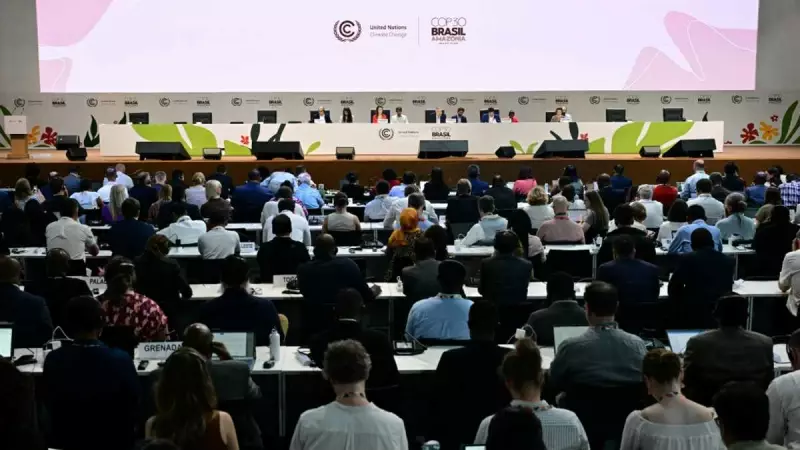
After two weeks of intense negotiations in the Brazilian Amazon, nearly 200 countries have reached a climate agreement that many environmental advocates consider significantly weakened. The UN climate summit in Belem concluded with a deal that falls short of explicitly calling for a fossil fuel phaseout, despite earlier pushes from European nations and climate-vulnerable countries.
Fossil Fuel Language Watered Down
The European Union, which had initially demanded a clear "roadmap" to phase out oil, gas, and coal, ultimately accepted a compromise text that only implicitly references transitioning away from fossil fuels. The final draft instead calls on nations to "voluntarily" accelerate their climate actions and recalls the broader consensus achieved at COP28 in Dubai.
EU Climate Commissioner Wopke Hoekstra expressed disappointment with the outcome, telling reporters, "We're not going to hide the fact that we would have preferred to have more, to have more ambition on everything." However, he acknowledged the agreement at least moves in the right direction.
Geopolitical Tensions and Isolation
The negotiations revealed significant geopolitical divides, with the EU finding itself increasingly isolated in its push for stronger language on fossil fuels. According to a member of the EU delegation, the bloc was cast as the "villains" during the talks as they faced opposition from oil-producing nations and emerging economies.
French Ecological Transition Minister Monique Barbut specifically identified Saudi Arabia, Russia, India, and several other developing countries as resisting stronger language on phasing out fossil fuels. Despite the diluted agreement, Barbut noted there was "nothing extraordinarily bad" in the final text.
Financial and Trade Compromises
Developing nations used the summit to pressure wealthier countries to increase financial support for climate adaptation. The resulting draft includes a call to "at least triple" adaptation finance by 2035, though specific funding commitments remained unclear.
The final agreement also incorporated trade language that the EU had initially resisted, reflecting demands from China and other emerging economies. This addition represented another compromise in the complex negotiation process that required consensus from all participating nations.
The summit's chaotic conclusion caps a turbulent two weeks that saw Indigenous protesters breach the venue and a fire force mass evacuations. The outcome represents a challenging balance between climate ambition and political reality in an increasingly divided global landscape.




