
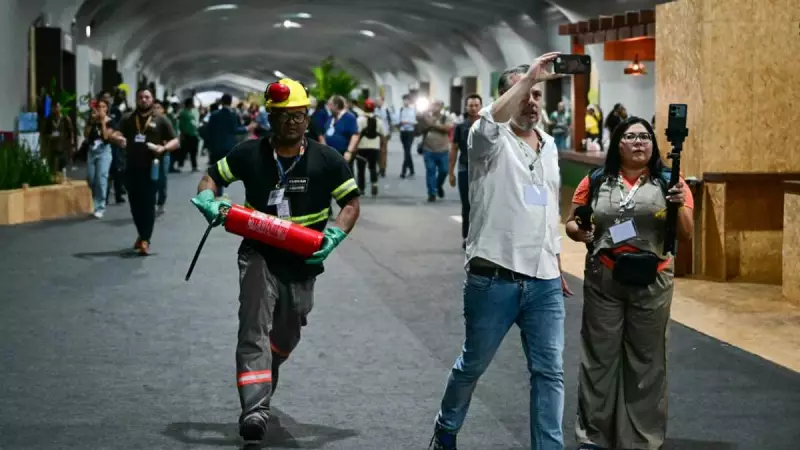
The final day of the UN climate summit in Brazil arrives amid high tension as countries remain sharply divided over fossil fuels, following a dramatic fire that forced the evacuation of the COP30 venue on Thursday.
Venue Fire Disrupts Critical Negotiations
Delegates are set to resume negotiations after a dramatic fire on Thursday afternoon torched a hole through the fabric ceiling of the COP30 venue, forcing a panicked evacuation. The blaze broke out around 2:00 pm local time (1700 GMT), quickly filling the cavernous halls with acrid smoke.
Organizers confirmed the fire was brought under control within six minutes, but the incident resulted in nineteen people being treated for smoke inhalation and two for anxiety attacks. The venue reopened later on Thursday night, though the symbolism of a fire breaking out at a summit dedicated to fighting global warming was hard to ignore.
Fossil Fuel Battle Intensifies
At the heart of the negotiations lies a bitter divide over fossil fuels. Brazilian President Luiz Inacio Lula da Silva has championed agreeing to a "roadmap" that would give countries specific targets for transitioning away from fossil fuels. However, in a dramatic turn, even the words "fossil fuels" were cut from the latest draft proposal put forward by the summit's Brazilian leadership.
This move was immediately criticized by more than 30 countries that co-signed a letter drafted by Colombia, stating: "We cannot support an outcome that does not include a roadmap for implementing a just, orderly, and equitable transition away from fossil fuels."
According to anonymous negotiators, China, India, Saudi Arabia, Nigeria and Russia have rejected the fossil fuel roadmap, creating a significant obstacle to reaching consensus on what Brazilian President Lula has called the "COP of truth."
Infrastructure Problems Plague Summit
The fire represents the third major incident to disrupt the summit since it began at the COP30 compound, located on the site of an old airport in Belem. Earlier, Indigenous protesters had stormed the venue and blockaded the entrance in peaceful demonstrations.
Infrastructure problems have beset the summit from the start, with participants reporting issues ranging from air-conditioning failures and leaking ceilings to electrical wiring concerns. Brazilian Tourism Minister Celso Sabino suggested the fire may have resulted from a short circuit or other electrical malfunction.
The choice of Belem as host city had raised concerns about inadequate infrastructure from the beginning, though President Lula defended holding the summit in the humid city on the edge of the world's largest rainforest.
With the summit scheduled to conclude on Friday, but climate negotiations often running into overtime, the hours lost to Thursday's evacuation make extended discussions increasingly likely. The outcome will test whether international cooperation can still function effectively on the critical issue of climate change.




