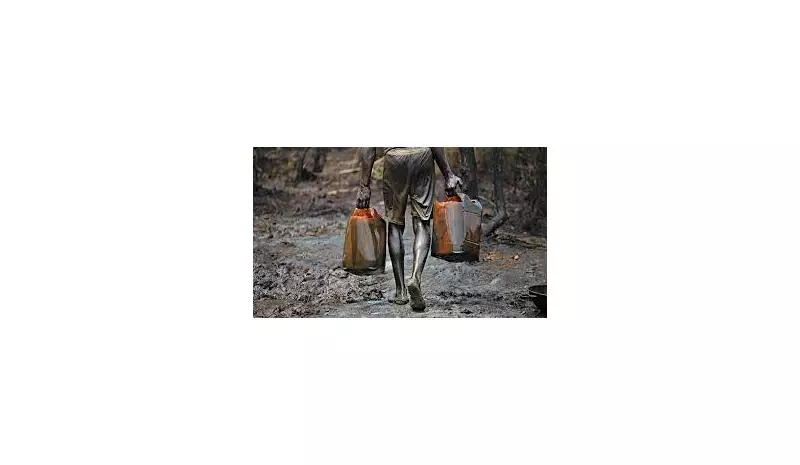
Nigeria is facing a severe economic crisis as a new report exposes staggering annual losses of $15 billion due to rampant oil theft and pipeline vandalism. This massive financial hemorrhage threatens to derail the ambitious oil and gas reforms initiated by President Bola Ahmed Tinubu's administration.
Unsustainable Losses and Economic Threats
The alarming findings were presented by Professor Usman Muhammed from Kaduna State University at the 1st Citizens Engagement Conference (North-West Edition) in Kaduna. The event, held with the theme “The Positive Impact of Oil and Gas Reforms by President Ahmed Bola Tinubu,” highlighted the dire situation. Professor Muhammed described the losses as “unsustainable” and a major danger to the government's Renewed Hope Agenda.
He warned that persistent fiscal leakages and poor institutional accountability could wipe out recent progress. “Despite being Africa’s largest oil producer, Nigeria continues to struggle with declining productivity and weak governance,” he stated. The report underscores a painful paradox: Nigeria sits on massive reserves of 37 billion barrels of crude oil and 209 trillion cubic feet of gas, yet its production has languished between 1.4 and 1.67 million barrels per day, falling short of the OPEC quota of 1.8 million barrels.
Weak Implementation and Comparative Failures
The study directly linked the dwindling oil output to Nigeria's economic woes, including an average inflation rate of 22 percent and unemployment of 33 percent between 2019 and 2024. Professor Muhammed acknowledged that the Petroleum Industry Act (PIA) of 2021 introduced significant structural changes, such as creating the Nigerian Upstream Petroleum Regulatory Commission (NUPRC). However, he noted that implementation remains weak.
His analysis revealed a strong positive correlation between oil production and GDP growth, suggesting that boosting output is crucial for national income. In a damning comparative analysis, Nigeria scored only 63 out of 100 for regulatory efficiency, trailing far behind global leaders like Norway (92) and the United States (90). This gap is blamed on weak institutional coordination and poor technology adoption.
Call for Private Investment and Deregulation
The report proposed concrete solutions to combat the crisis, including:
- Deploying digital monitoring systems
- Rehabilitating pipelines with anti-theft technology
- Increasing investment in research and development
- Promoting local content and gas-based industrialization
Echoing the need for change, Mallam Nasir AbdulQuadri, Co-convener of the conference, argued that the federal government should cede refinery operations to the private sector and focus solely on regulation. He pointed to the success of the 650,000 barrels per day Dangote Refinery as proof that private ownership works where public refineries have failed for decades.
“When we deregulate, we kill corruption. The subsidy era enriched a few individuals at the expense of the nation. Now the process is open and transparent,” AbdulQuadri asserted. He called for unity among Nigerians to support the ongoing reforms for long-term national progress.
Participants at the conference, including regulators and industry players, unanimously agreed that policy stability, transparency, and robust private-sector participation are essential to unlocking Nigeria's vast oil and gas potential and ending the debilitating cycle of theft and loss.