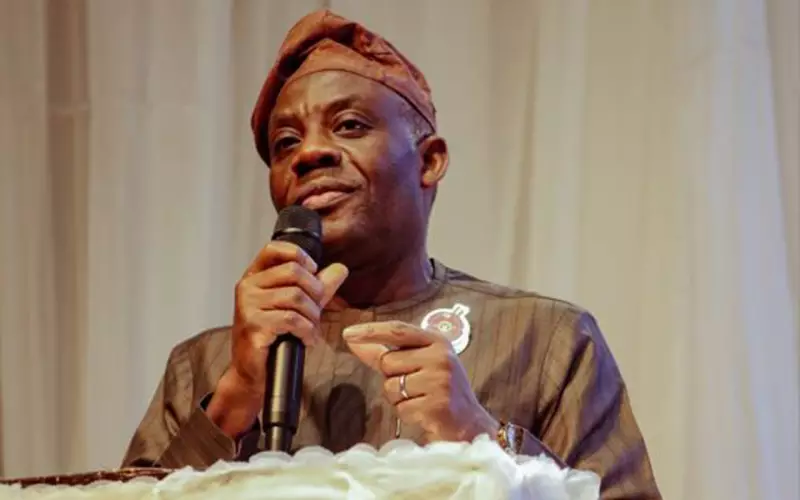
In a significant move to revolutionize Nigeria's education sector, the Minister of Education, Dr. Tunji Alausa, and the Minister of Communications, Innovation and Digital Economy, Dr. Bosun Tijani, have announced a comprehensive joint initiative to build an integrated digital education ecosystem across the country.
Breaking Down Government Silos
The ministers made this announcement during a special panel session at the Nigeria National EdTech Strategy Mid-term Co-creation Workshop held in Abuja on Friday. The event was organized in partnership with the Mastercard Foundation and the World Bank Group.
Unlike traditional government announcements, the session was conducted as a direct exchange, emphasizing urgency, collaboration and clarity in addressing the educational challenges facing Nigeria. Both ministers described their joint effort as a major departure from the usual siloed approaches that have characterized government interventions in the past.
Concrete Steps Toward Digital Transformation
Dr. Alausa delivered a stark assessment of the current situation, stating that Nigeria cannot continue delivering knowledge through outdated frameworks while preparing children for a digital global economy. "Doing nothing, or doing what we did before, is a total failure," he declared emphatically.
The Education Minister revealed several immediate actions already underway:
- Deployment of hundreds of smart schools and digital teaching platforms
- Installation of smart boards with full internet access in every federal government secondary school classroom within four months
- Zero-rated data access for teachers to access digital training platforms without cost
- Structured compensation mechanism starting January 2026 for teachers engaging in professional development training
Dr. Alausa emphasized that the initiative goes beyond mere hardware installation. "It's not just about installing smart boards or building innovation labs; there must be systems that make them work, remain functional, and deliver results," he explained.
Building a Connected Learning Ecosystem
Dr. Tijani drew parallels with Nigeria's successful financial sector reforms, noting that no sector has ever succeeded by working in isolation. "Nigeria has the best inter-bank settlement infrastructure in Africa because banks built an interoperable system. Education needs the same approach," he stated.
The Communications Minister outlined ambitious infrastructure plans to support digital inclusion:
- Installation of 4,000 telecommunications towers in rural regions
- Connection to nationwide fibre-optic backbone to reduce data costs and increase speeds
- Negotiations to lower smart device costs, including local manufacturing options using Nigeria's lithium deposits
"Whether in Makoko or Borno IDP camps or remote villages in Kebbi, every child must have access to quality digital learning content. Connectivity must become a national infrastructure, not a luxury," Tijani asserted.
Unified Strategy for Lasting Impact
Both ministers acknowledged that past interventions by agencies like NCC, USPF, NITDA, and TETFund were meaningful but fragmented. Dr. Alausa revealed that this problem is being addressed through the Nigeria Education Data Infrastructure, which will enable:
- Unified education data system
- Communication between platforms
- Integrated student-teacher learning records
- National-level planning and monitoring
"Education must speak with one voice. We are not creating another policy that gathers dust; implementation is the priority now," Alausa emphasized.
As Nigeria targets a $1 trillion economy, both ministers agreed that such ambition cannot be realized without transforming the education system into a skills-creating, problem-solving, technology-powered framework. Dr. Tijani delivered a particularly forward-looking statement: "Any teacher who doesn't understand how to use artificial intelligence is already behind."
The workshop is expected to produce an actionable blueprint for EdTech interoperability, teacher training, digital inclusion, and real-time content delivery across Nigeria. Both ministers have committed to ensuring this initiative results in measurable and irreversible transformation rather than ending up as another impressive but unimplemented document.