Media Personality's Old Tweets About Tech Founder Resurface
Social media platforms across Nigeria are buzzing after old tweets from popular media personality Ebuka Obi-Uchendu targeting Paystack co-founder Ezra Olubi suddenly resurfaced after more than a decade. The tweets, originally posted in 2010, show Ebuka expressing clear discomfort and disapproval toward comments made by Olubi during their early interactions on the platform.
The timing of these resurfaced tweets coincides with increased public scrutiny surrounding the tech entrepreneur, as Nigerians continue to examine various historical online posts linked to Olubi. The viral nature of these exchanges has sparked widespread discussion about past behaviors and how they align with current public perceptions.
The Specific Exchanges That Caught Attention
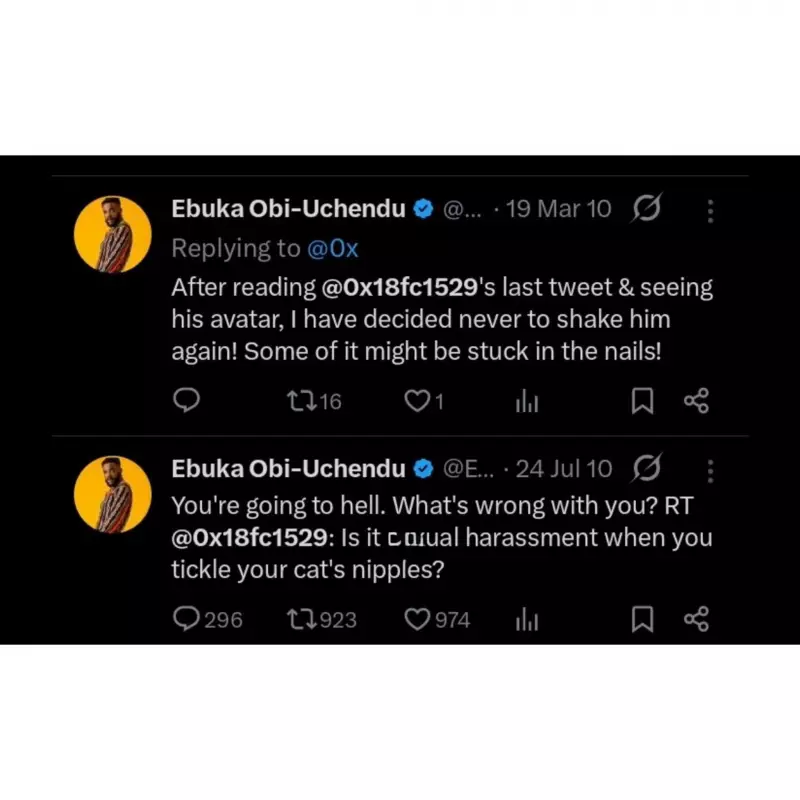
One particularly notable exchange occurred on March 19, 2010, when Ebuka responded to an earlier post from Olubi. The media personality wrote that after reading Olubi's tweet and seeing his profile picture, he had "decided never to shake him again." This strong reaction suggested significant discomfort with whatever content Olubi had shared at that time.
Another revealing interaction took place on July 24, 2010, when Ebuka replied to a questionable post from Olubi. The Paystack co-founder had asked whether "tickling a cat's nipples" could be considered harassment. Ebuka responded bluntly, calling the remark inappropriate and directly asking, "What's wrong with you?"
Social Media Reactions and Ongoing Scrutiny
The rediscovery of these tweets has generated massive engagement across Nigerian social media spaces. Many users are expressing surprise at the nature of the exchanges, while others are discussing how people's online behavior has evolved over the past fifteen years.
This situation highlights how digital footprints can resurface unexpectedly, particularly when individuals achieve significant public prominence. The ongoing examination of Olubi's old posts demonstrates how social media users are increasingly holding public figures accountable for their past statements and behaviors.
As the conversation continues to develop, these resurfaced tweets serve as a reminder that online interactions never truly disappear, and that historical digital behavior can suddenly become relevant years later when circumstances change.