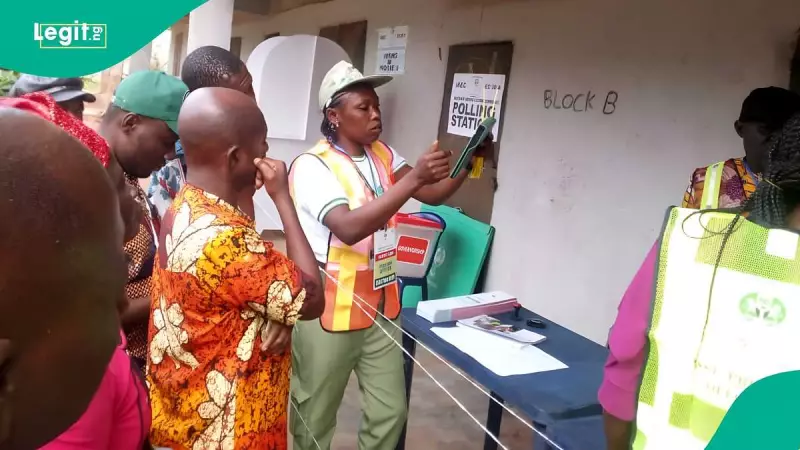
The recently concluded Anambra State elections have exposed a disturbing marketplace where votes were openly traded for cash, with transactions ranging from ₦3,000 to a staggering ₦30,000 per ballot. This represents a significant escalation from previous elections and reveals a wholesale convergence of survival needs and political calculation that threatens Nigeria's democratic foundations.
The Evolution of Electoral Commerce
According to conflict analyst Lekan Olayiwola, who documented this phenomenon, vote-buying in Anambra has undergone a dramatic transformation over the past decade. In 2013 and 2017, such transactions occurred in concentrated pockets with smaller denominations and dispersed operations. By 2021, the practice had become more strategic, targeting key urban wards that could influence overall outcomes.
The 2025 elections marked a new low with high-density, high-value transactions becoming the norm rather than the exception. This pattern suggests political actors have refined their approach, focusing resources on specific demographics and neighborhoods capable of swinging tightly contested races.
Institutional Contradictions Exposed
The electoral process revealed striking institutional dissonance that undermined public trust. While the Independent National Electoral Commission (INEC) orchestrated an orderly voting process with tens of thousands of security personnel and successfully managed PVC distribution and IReV uploads, the commission publicly dismissed vote-buying claims as unverified.
Simultaneously, the Economic and Financial Crimes Commission (EFCC) announced arrests of suspected vote-buyers, creating a confusing narrative for the public. This coordination gap between monitoring and enforcement agencies highlighted systemic weaknesses in Nigeria's electoral integrity framework.
The institutional response followed a familiar pattern: in 2013, enforcement was patchy; 2017 saw uneven monitoring improvements; 2021 witnessed more arrests but limited coherence; while 2025's contradictions became more visible due to social media amplification and heightened national scrutiny.
Survival Economics and Political Calculation
Beyond moral condemnation, a complex political economy underpins Nigeria's vote market. In regions like Anambra, where unemployment rates remain high and social safety nets are inadequate, small cash payments function as emergency relief rather than simple inducement.
A voter offered ₦5,000 to cast a particular ballot is not merely being bribed—they're performing a rational transaction between immediate survival needs and abstract civic participation. For many citizens navigating economic precarity, the short-term benefit of feeding their family outweighs the long-term democratic ideal.
Political actors face equally rational calculations. In Anambra's low-turnout context where less than 22% of registered voters participated, mobilizing even a few thousand votes through financial incentives can determine electoral outcomes. Parties with weak internal structures or facing highly competitive contests have strong motivation to deploy brokers, youth networks, and logistical machinery to secure these pivotal votes.
Evidence Challenges and Social Media Complications
The 2025 elections also highlighted the evidentiary challenges in combating vote-buying. Viral social media imagery showed bags stuffed with cash and videos captured transactional moments, but fact-checking organizations like Dubawa identified several widely shared items as misattributed or unrelated to the Anambra elections.
This mixture of legitimate reporting and misinformation complicated real-time responses and underscored the need for robust, verifiable evidence collection mechanisms. Despite near-complete IReV coverage, no automatic anomaly detection systems flagged transactional irregularities, leaving human agents to reconcile reports amid a confusing blend of rumor and evidence.
Structural Solutions for Systemic Problems
Addressing Nigeria's vote-buying epidemic requires interventions that extend beyond arrests and rhetoric. Operational improvements could include standardizing evidentiary kits for polling units with time-stamped cameras and secure upload portals for observers.
Coordinated standard operating procedures between INEC, EFCC, and the Independent Corrupt Practices Commission (ICPC) would allow simultaneous monitoring and enforcement without contradictory public messaging. Civil society organizations need formal referral pathways for credible citizen reports, with public tracking to maintain transparency.
Long-term solutions must address the root causes. Expanding pre-election social protection schemes like conditional cash transfers and emergency household support reduces the immediate financial incentive to accept inducements. Campaign finance transparency through mandatory bank-channeled contributions and audit mechanisms limits the liquidity available for electoral markets.
Ultimately, the Anambra episode exposed more than electoral infractions—it reflected survival pressures, opaque campaign finance, fragmented institutions, and civic alienation. Over 50,000 security officers, technological systems, and procedural efficiency could not secure trust or legitimacy when citizens face desperate choices between survival and civic duty.