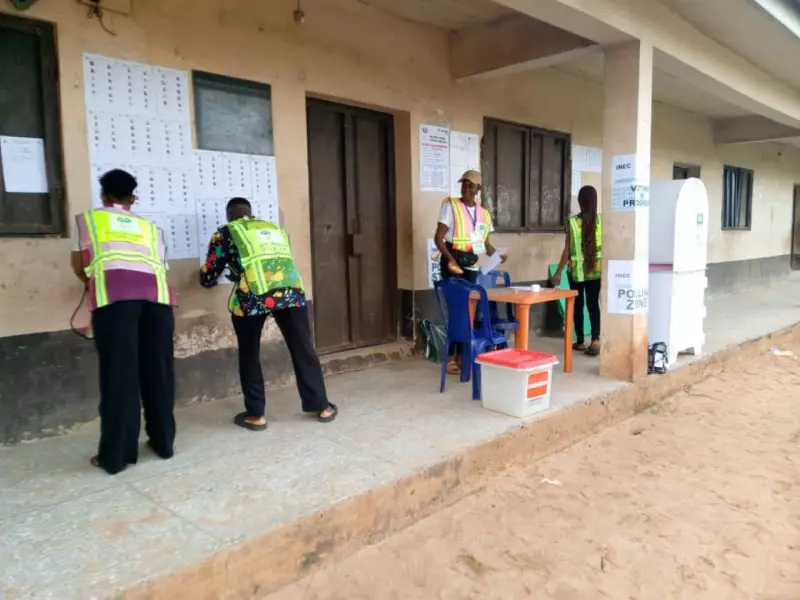
A comprehensive investigation into the 2025 Anambra off-cycle governorship election has uncovered disturbing patterns of electoral malpractice, with politicians systematically buying votes using snacks, beverages and direct cash payments.
Pervasive Vote Trading Across All Wards
The election monitoring group Kimpact Development Initiative (KDI) revealed in its final post-election report that vote trading occurred across all 326 wards in Anambra State. According to the organization, which deployed 370 trained observers, party agents openly induced voters and verified their ballot choices before dispensing rewards.
Presenting the report to journalists in Abuja on Friday, KDI executive director Bukola Idowu described the scale of inducement as both pervasive and alarming. He noted that transactional voting is becoming deeply entrenched in the state's political culture, posing a significant threat to democratic processes.
The report detailed how voters in many polling units openly displayed their marked ballots to party agents, who then escorted them to designated spots where they received snacks or direct cash payments. This blatant compromise of ballot secrecy has direct implications for the credibility and fairness of elections, facilitating coercion and diminishing public confidence.
Security Loopholes and Enforcement Failures
Despite security presence in over 88 percent of polling units, vote trading continued largely unhindered due to legal restrictions. Security officers were constrained by provisions of the Electoral Act, which required presiding officer approval before making arrests at polling units.
This legal loophole created a passive enforcement environment where security personnel observed infractions but did not intervene. The report called on the National Assembly to amend the law, expanding officers' powers to act immediately in cases of vote buying, intimidation and obstruction.
Beyond vote trading, the group documented 35 incidents of election-related violence, including voter intimidation, clashes, ballot box snatching, and the tragic killing of a councillor in Orumba South by gunmen. Voter intimidation and harassment accounted for the highest number of reports with eighteen incidents recorded.
Mixed Performance in Election Administration
The election experienced significant delays, with accreditation and voting beginning at 9:13 a.m. on average despite officials arriving around 8:00 a.m. Logistical difficulties, confusion over polling-unit locations and delayed security deployment contributed to the late commencement.
However, the report commended the Bimodal Voter Accreditation System (BVAS) for functioning effectively in more than 96 percent of polling units, with accreditation completed in under two minutes in most cases. INEC also received praise for uploading 98 percent of polling-unit results to the IReV portal by midnight, marking an improvement in transparency.
The organization's Ballot Integrity Project did flag minor inconsistencies in registered-voter figures, discrepancies in accredited-voter totals and isolated cases of overvoting, though these issues were noted as not affecting the overall outcome.
KDI highlighted a troubling pattern of interference by political party agents across several polling units, reflecting a coordinated breach of electoral standards. Observers documented repeated disruptions driven by party agents from the All Progressives Grand Alliance (APGA), the All Progressives Congress (APC), the Young Progressives Party (YPP) and others operating inconsistently with Nigeria's electoral guidelines.
The report concluded that while the election showed progress in technology deployment and transparency, persistent weaknesses such as vote buying, compromised ballot secrecy, weak enforcement and uneven security presence continue to undermine electoral integrity in Nigeria.