
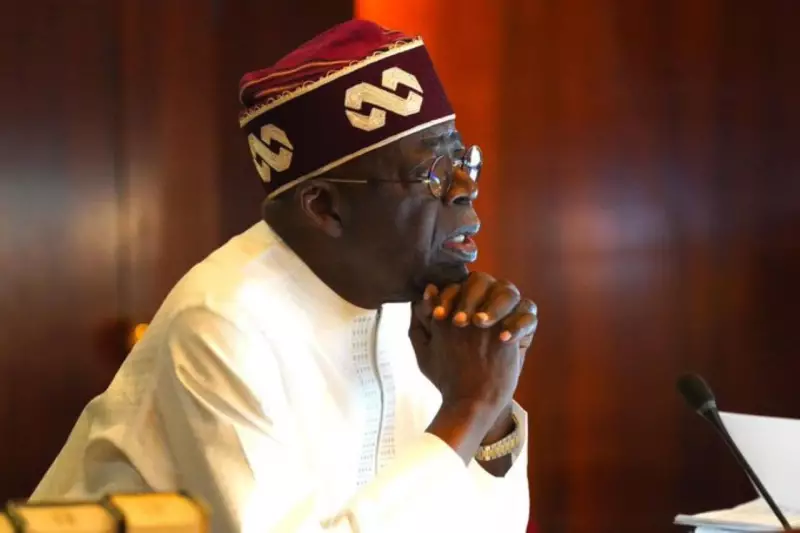
President Bola Tinubu has taken a firm stance against the deployment of private military and security contractors in African conflict zones, declaring that their presence undermines national sovereignty and complicates peace efforts.
Strong Opposition to Mercenary Forces
During the first plenary session on 'Peace, Security, Governance and Multilateralism' at the 7th African Union-European Union Summit in Luanda, Angola, Nigeria's leader delivered his position through Vice President Kashim Shettima. The summit took place on Monday, bringing together African and European heads of state to address critical continental issues.
Tinubu told the assembled leaders that Africa's security challenges, including terrorism and transnational organized crime, require coordinated, state-led responses rather than parallel forces with unclear mandates. "We stand resolutely against the use of private military and security companies in African conflicts," he stated, emphasizing that such entities often complicate resolution efforts.
Nigeria's Security Achievements and Regional Leadership
The President highlighted Nigeria's counter-terrorism successes, revealing that more than 250,000 Boko Haram-affiliated individuals had surrendered in early 2025. This achievement came through a combination of kinetic and non-kinetic measures, including the Multinational Joint Task Force operations in the Lake Chad Basin.
Tinubu reinforced Nigeria's longstanding approach to regional peace missions under the Economic Community of West African States (ECOWAS) and the African Union (AU). He praised the EU as one of the few remaining platforms for continent-to-continent engagement that maintains mutual respect and shared aspirations amid global shifts away from multilateralism.
Call for UN Reform and Collaborative Solutions
In a significant move, President Tinubu underscored Nigeria's call for permanent United Nations Security Council seats for African nations with full privileges, including veto power. "It is time for Africa to occupy permanent seats on the UN Security Council," he declared, urging EU support for the continent's reform agenda and calling for genuine text-based negotiations to commence immediately.
Addressing migration challenges, the President stressed that criminalizing mobility has only compounded insecurity. He proposed converting mobility into safe, orderly, and productive pathways that benefit both continents, citing Nigeria's Technical Aid Corps and business process outsourcing initiatives as successful models.
Tinubu concluded by reaffirming Nigeria's readiness to collaborate with the EU on peace and security initiatives, emphasizing that efforts must be co-created with African stakeholders and anchored in local ownership. The 7th AU-EU Summit was co-chaired by Angola's President João Lourenço and the President of the European Council, António Costa.




