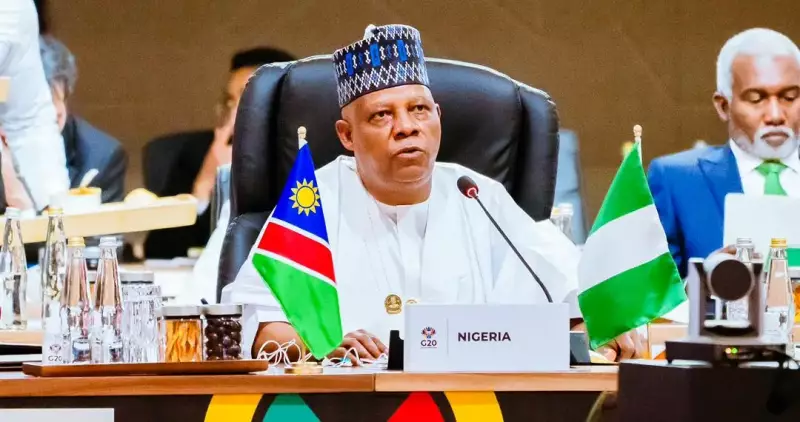
Nigeria has taken a firm stance at the 2025 G20 Leaders' Summit, demanding a more equitable global system for the trade of critical minerals and the governance of artificial intelligence.
A Call for Justice in Mineral Trade
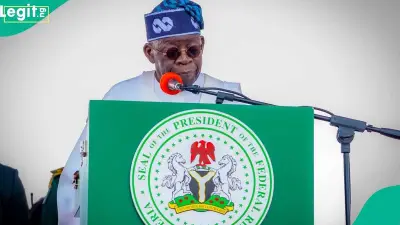
Representing President Bola Ahmed Tinubu at the Third Session of the summit in Johannesburg, Vice President Kashim Shettima urged world leaders to support a framework that ensures fairness. He insisted that communities in Africa, which are rich in resources, must directly benefit from the industries developed on their land.
According to a press statement released on Saturday by Stanley Nkwocha, the Senior Special Assistant to the President on Media & Communications, Shettima declared that critical minerals should be a catalyst for industrial development in Africa, not a perpetuation of historical inequities.
"The possession of resources alone does not guarantee prosperity," the Vice President warned, stressing the urgent need for transparency and accountability in global mineral supply chains. He championed the cause of "value addition at the source" to ensure host communities are not left behind.
Ethical AI and People-Centred Development
Aligning with the summit's theme, "A Fair and Just Future for All: Critical Minerals, Decent Work, Artificial Intelligence," Nigeria also endorsed the creation of ethical global standards for AI. President Tinubu argued that AI must reinforce development and not widen the existing global inequality.
"Nigeria supports the creation of global ethical standards for AI that uphold safety, transparency and equity," he stated. "We must ensure that AI becomes a tool of empowerment, not exclusion; of job creation, not displacement."
The Vice President highlighted Nigeria's efforts under the Renewed Hope Agenda, which involves training young people in technology and vocational skills. He emphasized that "decent work is the anchor" that makes economic transitions fair, inclusive, and sustainable.
Reforming an Outdated Financial System
President Tinubu also turned his attention to the international financial architecture, telling G20 leaders that the current system no longer reflects contemporary realities. He pointed out that developing nations face constraints that weaken trade and financial inclusion, with debt pressures continuing to undermine growth.
"Only a more equitable and more responsive system can manage global financial flows with fairness and address recurring debt crises with sincerity," he insisted.
The Nigerian delegation made it clear that Africa seeks a future where it is not merely a supplier of raw materials but a continent where value creation and innovation thrive. They underscored that achieving this shift requires the collective resolve of the G20, with sustainable financing being critical for implementing national priorities.