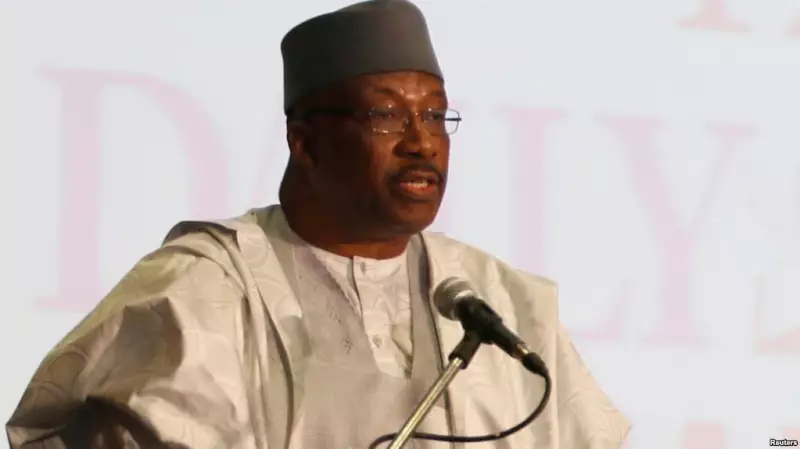
Former Minister of Interior, Lieutenant General Abdulrahman Bello Dambazau (rtd), has raised alarm over the deteriorating security situation in Northern Nigeria, revealing that criminal elements have established parallel governments in captured territories.
Non-State Actors Establish Parallel Governance
The retired Chief of Army Staff made these shocking revelations during his presentation at the First Media and Security Summit held in Birnin Kebbi, Kebbi State on Monday, November 10, 2025. The summit, themed 'Existential Threats and National Security', brought together key stakeholders to address the region's security challenges.
"We have gotten to a situation where bandits and insurgents have taken some of our communities, taxing and making laws for them," Dambazau stated emphatically.
Two Decades of Escalating Violence
General Dambazau emphasized that the insecurity problem in Northern Nigeria has persisted for over two decades, with recent years showing significant deterioration. He highlighted specific incidents where people were killed in mosques across Katsina, Borno, Zamfara and Kano states, illustrating the brazen nature of the attacks.
The former minister painted a grim picture of the human cost, stating that thousands have been killed and millions displaced from their homes. The crisis has created a devastating social impact, with the number of widows and orphans increasing dramatically across the region.
Economic activities have also suffered tremendously, as farmers have lost their farms and herders have had their cattle rustled, often without any meaningful intervention from state security actors.
Comprehensive Solutions Proposed
To address the root causes of the insecurity, Dambazau urged Northern governors to take concrete economic measures. He specifically recommended the establishment of State Ministries of Mineral Resources and closer collaboration with federal agencies to properly harness the region's natural resources.
"This would improve their revenue base to end poverty in their respective states and reduce the level of insecurity," he explained.
The retired general also outlined several other critical measures needed to restore stability:
- Restoring the dignity of traditional institutions
- Revitalizing agricultural sectors where the North has historical strength
- Addressing the massive problem of out-of-school children
- Embracing social inclusion policies
Dambazau highlighted that over 70 percent of those suffering from poverty due to insecurity are from Northern Nigeria. He identified religious extremism as a major threat to security, noting that it has enabled groups like Boko Haram, Lakurawa terrorists and various bandit factions to unleash violence on civilian populations.
Regional Leaders Echo Concerns
The Sultan of Sokoto, Alhaji Muhammad Sa'ad Abubakar III, who also spoke at the summit, emphasized that security is everybody's responsibility. He called for collective action, stating "We need to come together to talk with each other on how to solve this problem."
Reflecting on Nigeria's better days, the Sultan noted "We were not like this before, Nigeria was not what it is today. We can solve the problem by coming together and having understanding, and going ahead to implement the decision we reached to have peace."
Governor Abdullahi Sule of Nasarawa State described the insecurity in the North West as particularly worrisome and urged the summit to examine root causes, including potential climate change impacts.
Host Governor Nasir Idris of Kebbi State expressed optimism that the summit would provide the necessary platform to discuss Northern Nigeria's challenges and develop practical solutions to the security crisis that has allowed non-state actors to establish illegal governance structures.