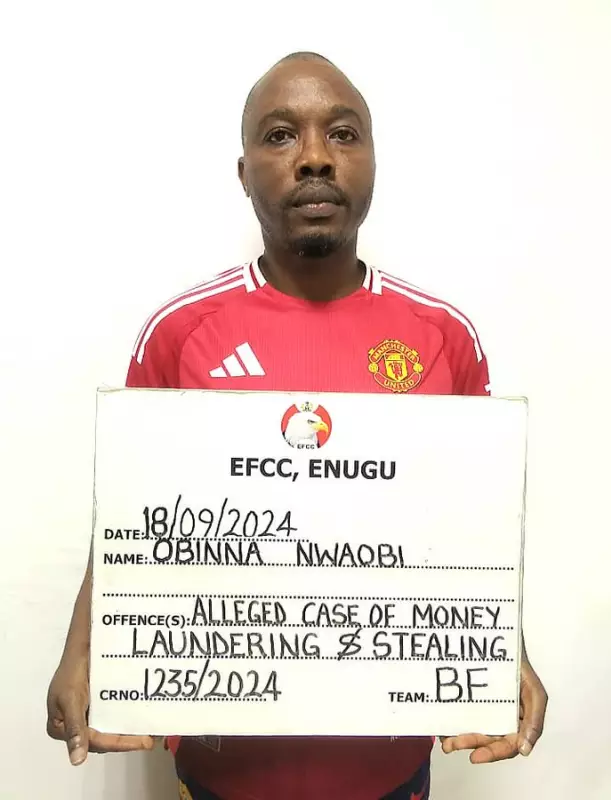
The Economic and Financial Crimes Commission has brought criminal charges against a former banking official accused of illegally transferring customer funds amounting to over half a million dollars.
Bank Executive Faces Nine-Count Charge
On Thursday, November 13, 2025, the Enugu Zonal Directorate of the EFCC presented Obinna Nwaobi before Justice F. O. Giwa-Ogunbanjo at the Federal High Court in Independence Layout, Enugu State. The defendant, who previously served as Head of Operations at Access Bank Nigeria Plc, Enugu branch, faces nine separate charges related to forgery and criminal diversion of funds.
The case centers around the alleged unauthorized transfer of $510,000 belonging to Lantern Gate Nigeria Limited from their Access Bank account numbered 0761770127. Court documents reveal that the transactions occurred on or about August 8, 2024, while Nwaobi held the position of Head of Operations at the bank's Enugu branch.

Details of the Alleged Financial Crimes
Count seven of the charge sheet specifies that Nwaobi induced Access Bank Nigeria Plc to transfer the substantial sum under false pretenses. The prosecution alleges he claimed that Lantern Gate Nigeria Limited had provided consent and mandate for the transfer, knowing this representation to be completely false.
This particular charge falls under Section 1 (b) of the Advance Fee Fraud and Other Fraud Related Offences Act, 2006, which carries serious penalties upon conviction.
Count eight addresses forgery allegations, accusing Nwaobi of knowingly creating a false Access Bank Domestic Fund Transfer Form "D" dated August 28, 2024. The prosecution contends he intended this forged document to be acted upon as genuine, potentially causing significant prejudice to Access Bank Plc.
This forgery charge is brought under Section 1 (2) (a) of the Miscellaneous Offences Act 2004, another serious financial crime legislation.
Court Proceedings and Bail Conditions
When the charges were formally read to him in court, Obinna Nwaobi pleaded "not guilty" to all nine counts. His defense counsel, F. C. Obinna, immediately pursued bail for his client, presenting an application dated October 24, 2025, supported by an eight-paragraph affidavit.
The EFCC's legal representative, Assistant Commander of the EFCC ACE II Mainforce Adaka Ekwu, strongly opposed the bail request. Through an eleven-paragraph counter affidavit filed on November 12, 2025, the prosecution argued that the defendant might abscond given the quality of evidence against him.
After considering arguments from both legal teams, Justice Giwa-Ogunbanjo granted bail under strict conditions. The court set bail at N250 million and required three sureties for equivalent amounts.
The bail conditions include:
- Two sureties must possess landed properties within Enugu State and submit the property documents to the court
- The third surety must be a relative of the defendant who provides evidence of tax payments for three years
- The defendant and all sureties must each deposit two passports with the court
- The defendant must surrender his international passport and National Identification Number until case resolution
Despite the bail approval, the court ordered Nwaobi remanded at the Nigeria Correctional Service facility in Enugu until he meets the stringent bail conditions. The case has been scheduled for trial on March 10, 11, and 12, 2026.
Case Origins and Investigation
The legal proceedings stem from an investigation that began on September 11, 2024, when the EFCC received a formal petition from Access Bank Plc. The bank alerted authorities to suspicious unauthorized transfers from a customer's account.
According to the petition, the $510,000 belonging to Lantern Gate Nigeria Limited was moved to six different accounts under the authorization of Obinna Nwaobi, then Head of Operations, without obtaining proper customer approval.

The case highlights ongoing efforts by Nigerian financial regulatory authorities to combat internal fraud within banking institutions and protect customer funds from unauthorized access by bank employees.