
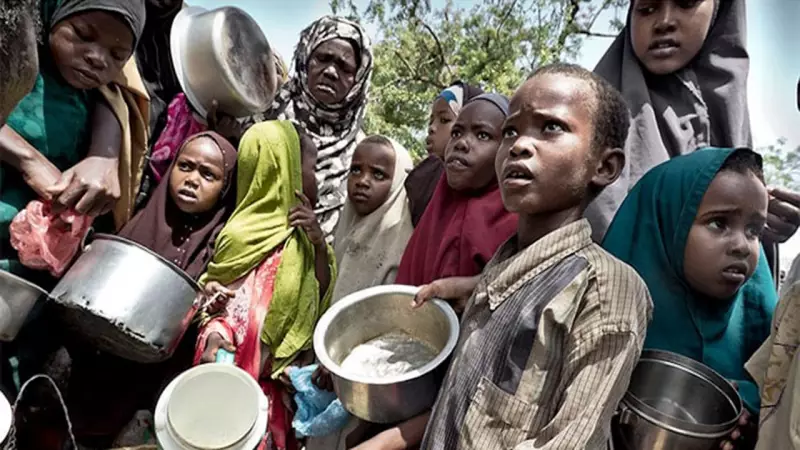
The Nigerian Red Cross Society has sounded an urgent alarm about Africa's escalating food crisis, revealing that more than 700 million people across the continent now face food insecurity.
Massive Initiative Launch in Abuja
During a significant event held in Abuja on Monday, the Nigerian Red Cross Society unveiled the Africa Zero Hunger, United for Durable Solutions initiative. This comprehensive program represents a coordinated effort to tackle the recurring nature of food emergencies that have plagued the continent.
Secretary-General of the NRCS, Abubakar Kende, addressed attendees with sobering statistics and a determined vision. "We are here for a commitment," Kende declared. "A commitment to a Nigeria where no child goes to bed hungry, and where hunger is not a life sentence handed down by circumstance."
Staggering Hunger Statistics Revealed
The scale of Africa's hunger problem is truly alarming. Kende disclosed that more than one-third of all undernourished people globally live in Africa, totaling approximately 282 million individuals facing severe hunger.
Even more concerning, Sub-Saharan Africa accounts for almost one-third of the global total, with a staggering 724 million people experiencing moderate or severe food insecurity. These numbers highlight the urgent need for immediate and sustained intervention.
Comprehensive Strategy Against Hunger
The Zero Hunger Initiative represents a strategic shift in addressing food crises. Rather than simply responding to emergencies, the program combines early warning systems with long-term development approaches.
Key components of the initiative include:
- Rehabilitation of water points and recovery of livelihood assets
- Promotion of climate-smart and nutrition-sensitive agricultural practices
- Enhancing access to affordable financial services and market participation
- Protection and restoration of ecosystems
- Strengthening community self-help groups like Mothers Clubs
Kende emphasized that the International Federation of Red Cross and Red Crescent Societies (IFRC) and 49 African National Societies are driving this ambitious program. The extensive network of thousands of community-embedded volunteers positions the organization uniquely to lead such efforts effectively.
Community-Led Solutions and Hope
The initiative strongly emphasizes community-driven approaches and sustainable development. "This ambitious program is designed to address the cyclic nature of shocks and crises," Kende explained, "necessitating a comprehensive approach from early action to long-term development."
By integrating anticipatory social protection mechanisms, the program aims to prepare communities for climate and socioeconomic shocks. This forward-thinking approach ensures that livelihoods are not only strengthened but also adapted to withstand the challenges of climate change.
Kende highlighted the practical impact of their work, noting that over 800,000 volunteers witness both the struggle and the potential for change daily. "Every day, our volunteers see the face of hunger in communities across this country," he said. "And every day, they also see the power of hope: mothers learning to nourish their families, children getting a second chance through proper nutrition, and communities rebuilding their resilience."
The Secretary-General concluded with a powerful call to action, urging Nigerians to reject the notion that hunger is inevitable. "Hunger is not destiny," he asserted. "Hunger is a challenge, and challenges are frozen when nations unite."
The launch represents a significant step toward creating durable, community-led solutions for a hunger-free Nigeria and Africa, bringing together government agencies, humanitarian organizations, and private sector partners in a unified front against food insecurity.




