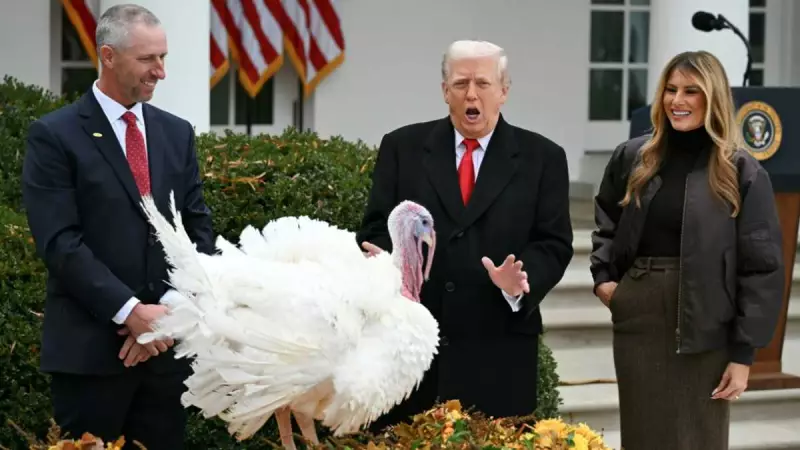
As American families prepare for Thanksgiving celebrations, farmers and business owners across the United States are raising alarm about significantly increased production costs driven by President Donald Trump's tariff policies.
Contradiction Between Reality and Rhetoric
While the Trump administration promotes messages of economic strength and falling prices, agricultural producers tell a different story. Recent government data shows grocery prices have risen 2.7 percent from a year ago in September, with a Politico poll identifying groceries as the most challenging expense category for American households.
President Trump took to his Truth Social platform over the weekend, asserting that "prices were coming sharply down" and that his economic work would eventually be appreciated. The White House has pointed to cheaper Thanksgiving meals offered by retailers this year, though observers note this could reflect different product mixes rather than genuine price reductions.
Farmers Bear the Brunt of Tariff Impacts
North Carolina-based farmer Mary Carroll Dodd provided concrete evidence of the tariff effects, telling reporters that "because of increases in our cost, mostly due to tariffs, we've had to raise the price of some of our vegetables" including collards and kale.
The situation extends beyond vegetable farming. Nick Levendofsky, executive director of the Kansas Farmers Union, explained that input costs for fertilizer, seed, chemicals, equipment and fuel were already at record highs before new tariffs. "With tariffs, they are going up even more," he emphasized.
The ripple effects reach turkey production too. "Corn and soybeans make up much of the feed for turkeys and other livestock. When those crops cost more to grow, the price per pound of turkey goes up," Levendofsky noted. This comes as wholesale turkey prices are already approximately 40 percent higher due to supply challenges from avian illnesses, according to the American Farm Bureau Federation.
Broader Business Impacts Beyond Agriculture
The challenges extend throughout the supply chain. The Farm Bureau's recent survey highlighted that prices of fresh vegetables have jumped significantly, with a "continued shortage of farmworkers" and rapidly growing wages adding to cost pressures.
Jeremy Horpedahl of the libertarian Cato Institute connected labor shortages to immigration policies, noting "almost certainly some of that labor shortage is due to the crackdown on both legal and illegal immigration."
Small business owners face particularly severe challenges. Jared Hendricks, owner of Village Lighting Company in Utah, revealed his company is "approaching a million dollars in tariffs this year" that weren't included in original forecasts. His company specializes in holiday decorations and has been forced to sell products at a loss due to pre-existing customer agreements.
"We've sold a lot of that good to them directly at a loss," Hendricks admitted. "At this point, we've kind of transitioned from working for profits to working for tariffs. We are just in business to pay off our tariff debt."
Diverging Perspectives on Tariff Effects
Proponents of Trump's trade strategy argue that tariffs aren't the primary driver of price increases in essential sectors. Economist Jeff Ferry of the Coalition for a Prosperous America, which supports Trump's tariffs, suggested that "The supply chain, including manufacturers and the importers, are absorbing most of the tariff while holding consumer price increases in check."
He pointed to other factors affecting specific markets, such as drought conditions and shrinking cattle herds driving US beef prices higher in recent years.
Despite these arguments, the government appears to recognize farmers' challenges, considering aid for the agricultural sector hit by low crop prices and trade disputes with Beijing. However, as Levendofsky stated, "Farmers don't want a bailout. They want trade, not aid."
As the holiday season approaches, the disconnect between administration messaging and on-the-ground economic realities continues to widen, leaving farmers and business owners navigating increasingly difficult financial waters.