
China has established overwhelming control over the global rare earth industry through a carefully orchestrated decades-long strategy, providing Beijing with significant strategic advantage in its ongoing trade conflict with the United States.
The Foundation of China's Rare Earth Supremacy
China's dominance spans the entire rare earth value chain, from natural reserves and mining operations through processing capabilities and technological innovation. The country controls approximately two-thirds of global rare earth mining and commands a near-total monopoly on separation and refining processes, accounting for roughly 90% of all global processing according to recent analysis.
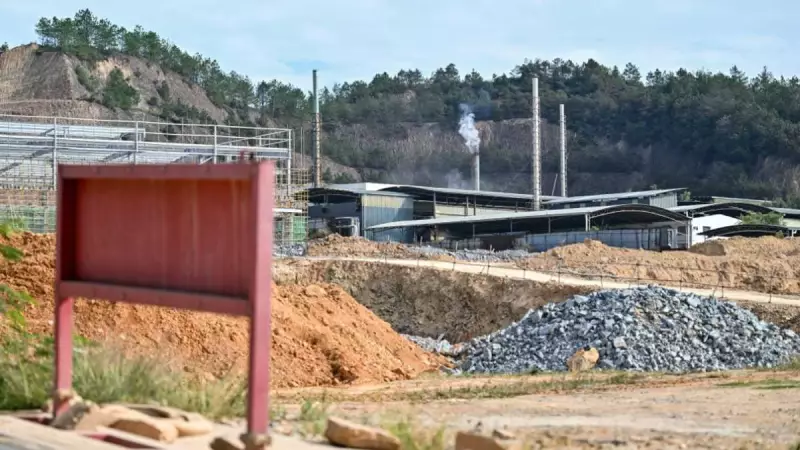
During a rare media visit to the southeastern mining region of Ganzhou this month, journalists observed extensive activity at rare earth facilities. Dozens of trucks moved in and out of mining sites while multiple processing plants operated at full capacity. The region specializes in "heavy" rare earth elements including yttrium and terbium, crucial components for advanced technologies.
Strategic Leverage in US-China Relations
In early October 2025, China imposed sweeping export restrictions on rare earth minerals, sending shockwaves through global manufacturing sectors. These measures particularly alarmed Washington, where officials have been engaged in renewed trade tensions with Beijing since President Donald Trump began his second term.
The strategic importance of these 17 key elements cannot be overstated. Rare earth minerals are vital for defense applications including fighter jets, missile guidance systems, and radar technology, while also being essential components in everyday products like smartphones, medical equipment, and automobiles.
At a high-stakes meeting in South Korea late last month, Trump and Chinese President Xi Jinping agreed to a one-year truce in their blistering tariff war. The deal temporarily guarantees supply of rare earths and other critical minerals to the United States, effectively neutralizing some of the most punishing US trade measures in what many analysts view as a diplomatic victory for Beijing.
Global Response and Future Outlook
Washington and its allies are now racing to develop alternative mining and processing supply chains, but experts warn this process will require years to bear fruit. Heron Lim, an economics lecturer at ESSEC Business School, noted that recent challenges have "paved the way for more countries to look into expanding rare earth metal production and processing."
The United States has directed substantial funding toward shoring up domestic production as part of efforts to achieve a complete "mine-to-magnet" supply chain by 2027. Recent developments include an $8.5 billion critical minerals agreement with Australia and cooperation deals with Japan, Malaysia, and Thailand.
Amelia Haines, a commodities analyst at BMI, emphasized the ongoing risk during a recent seminar, stating that "The United States and European Union are heavily reliant on imports of rare earth elements, underscoring significant risks to critical industries."
Despite awareness of the rare earth dependency problem dating back to a 2010 incident when China suspended shipments to Japan during a territorial dispute, Western nations have struggled to meaningfully challenge China's dominance. Fifteen years after the Obama administration called for improved domestic resilience, China remains the undisputed global leader in rare earth production and processing.




