
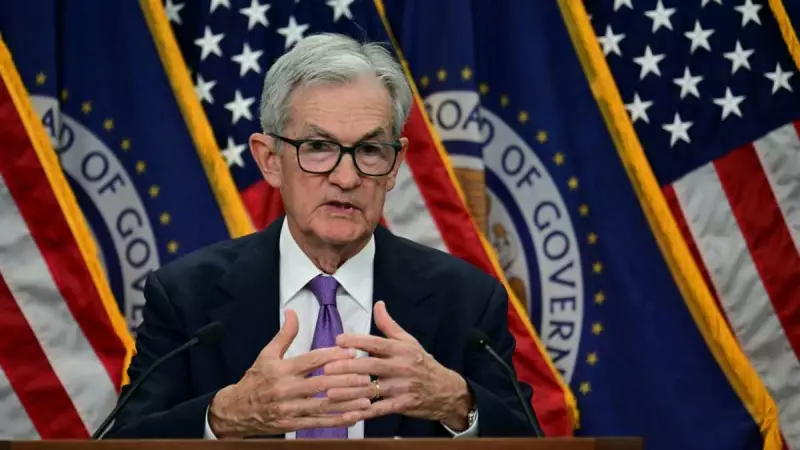
Recent minutes from the US Federal Reserve's October meeting indicate that numerous officials are leaning against implementing another interest rate reduction in December, a decision that will likely provoke President Donald Trump who has been aggressively pushing for lower borrowing costs.
Divided Views on Monetary Policy
The minutes from the October 28-29 gathering revealed significant disagreement among Fed members about the appropriate course of action for the upcoming December meeting. Many participants suggested that maintaining the current target range for the rest of the year would likely be appropriate given their economic projections.
During the October meeting, Fed officials had voted to implement their second consecutive interest rate cut this year, bringing the benchmark lending rate down to a range between 3.75-4.0 percent. However, Fed Chair Jerome Powell quickly clarified after announcing the decision that a further reduction in December was "not a foregone conclusion."
Economic Uncertainty Complicates Decision
The central bank's deliberations occur amid heightened uncertainty about the economic outlook. Policymakers have identified several concerning factors, including potential risks to the job market and worries that inflation might prove more persistent than anticipated, even after the effects of Trump's tariffs diminish.
The situation has been further complicated by a record-long government shutdown that lasted from October to mid-November, which suspended the release of crucial government economic reports. This data blackout, particularly regarding inflation figures, has left both policymakers and businesses struggling to accurately assess the condition of the world's largest economy.
Oliver Allen of Pantheon Macroeconomics noted that "these minutes underline that the FOMC remains far more divided than usual on the next steps," though he anticipates the Fed will continue easing policy over time.
Labor Market and Consumer Spending Patterns
Fed officials generally expect labor market conditions to "soften gradually" in coming months, with companies showing reluctance both to hire new employees and to lay off existing workers.
The minutes also highlighted a noticeable divergence in spending patterns across different income groups. Consumption growth appears to be primarily supported by households with higher incomes who benefit from strong equity market performance. Meanwhile, lower-income households are becoming increasingly price-sensitive and are adjusting their spending habits in response to higher costs and economic uncertainty.
Regarding inflation, many officials anticipate a further increase in underlying goods inflation in the coming quarters as Trump's tariffs take effect, though the timing and magnitude remain unclear as businesses require time to adjust their pricing strategies.
The October vote saw 10 of 12 voting FOMC members supporting the 25 basis point rate reduction. Of the two dissenters, Fed Governor Stephen Miran advocated for a larger 50 basis point cut, while Kansas City Fed President Jeffrey Schmid preferred keeping rates unchanged.
President Trump expressed his frustration with the central bank's approach, stating he would "love to fire" Powell and revealing he had urged Treasury Secretary Scott Bessent to "work on" the Fed chairman.




