
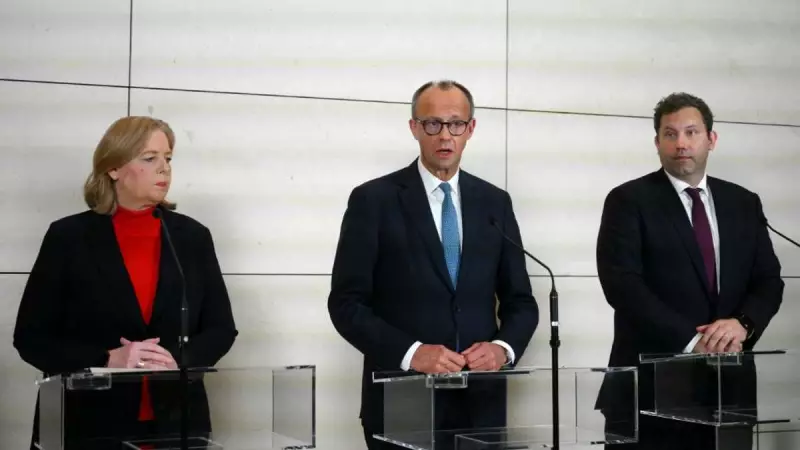
The German government has taken bold steps to revitalize its struggling economy by approving a revised 2026 budget that includes significantly higher borrowing than initially planned. The budget committee gave its final approval to the spending plans on Thursday, setting the stage for massive investments in defense and economic stimulus measures.
Budget Details and Increased Borrowing
Lawmakers confirmed that the German parliament's budget committee has approved spending plans totaling 524.5 billion euros ($610 billion) for 2026. The most striking aspect of the revised budget is the substantial increase in new borrowing, which is now expected to reach just under 98 billion euros.
This represents a significant jump from previous estimates. In a draft approved at the end of July, net borrowing was projected at 89.9 billion euros. The current year's borrowing of around 82 billion euros also pales in comparison to the newly approved figures.
Economic Relief Measures Announced
Chancellor Friedrich Merz and his coalition partners agreed on several relief measures aimed at boosting Europe's largest economy. The most significant intervention involves reducing industrial power prices for key sectors.
From 2026 to 2028, the cost of electricity for major industries including chemical and steel production will be reduced to five cents per kilowatt hour. Finance Minister Lars Klingbeil estimated this measure would cost the state between three and five billion euros.
The coalition also decided to reverse a planned increase in taxes on the aviation sector, providing the industry with savings of approximately 350 million euros.
Defense Spending and Political Divisions
A substantial portion of the new borrowing is earmarked for overhauling Germany's armed forces. The country is prioritizing military modernization in response to potential Russian threats, addressing years of underfunding in defense.
However, the government's approach has sparked controversy in a nation known for its traditionally conservative fiscal policies. Sebastian Schaefer, budget spokesperson for the Greens Party, criticized the ruling coalition, stating "The 2026 budget shows that the CDU/CSU and SPD have no plan for the future."
Critics argue that the government is using special funds intended for infrastructure and climate projects to cover day-to-day expenses rather than long-term investments. Some economists have questioned the wisdom of relying heavily on borrowing for short-term economic stimulation without implementing necessary structural reforms.
The revised budget plans are expected to be passed by parliament in November, marking a significant shift in Germany's fiscal policy as Chancellor Merz seeks to end two years of recession through substantial government spending.




