
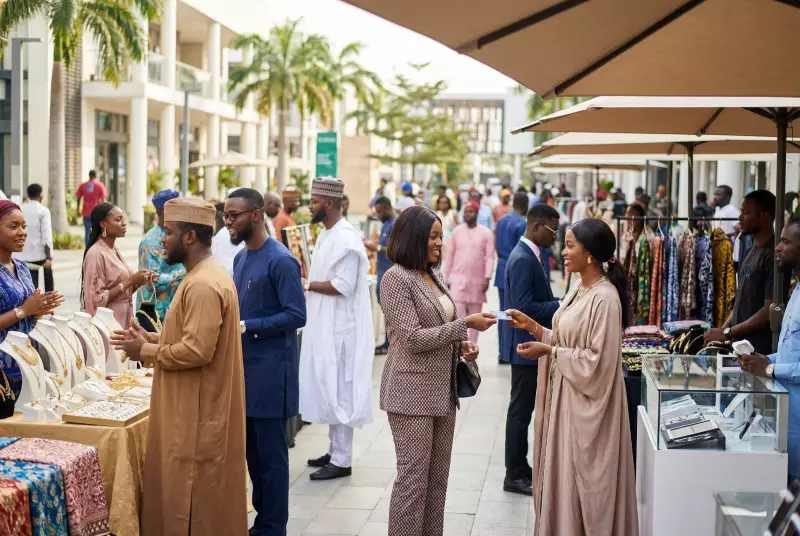
After extensive research into Nigeria's economic landscape and wealth distribution patterns, a clear picture emerges that challenges simplistic tribal narratives about wealth. The question of which tribe is the richest in Nigeria deserves a nuanced examination that goes beyond surface-level stereotypes and delves into the complex reality of our nation's economy.
The Complex Reality of Nigeria's Wealth Distribution
When examining Nigeria's wealth patterns, the data reveals that economic success transcends ethnic boundaries. The National Bureau of Statistics consistently shows that wealth concentration occurs primarily in urban centers rather than along strict tribal lines. This crucial insight tells us more about opportunity structures than inherited advantages.
Having visited commercial hubs across Lagos, Kano, and Port Harcourt, what becomes immediately apparent is how entrepreneurship flourishes across all ethnic identities. While the Igbo have developed a notable reputation for business acumen, major Nigerian markets showcase successful Yoruba, Hausa, Ijaw, and numerous other ethnic groups building impressive commercial enterprises.
The reality is straightforward: wealth in Nigeria correlates more strongly with education, access to capital, urban residence, and business networks than with tribal affiliation. Central Bank of Nigeria economic reports consistently demonstrate that the wealthiest Nigerians come from diverse ethnic backgrounds, united more by their access to opportunities than by their tribal origins.
Examining Nigeria's Wealthiest Individuals Across Ethnic Groups
When analyzing Nigeria's billionaire class, the ethnic diversity becomes immediately apparent. The data shows significant representation across major ethnic groups, challenging any narrative of tribal dominance in wealth creation.
Aliko Dangote, Nigeria's wealthiest individual from the Hausa-Fulani ethnic group, has built an empire in cement manufacturing and diversified industries with an estimated net worth exceeding ₦14 trillion. Mike Adenuga, a Yoruba businessman, follows with substantial wealth in telecommunications and oil exploration valued at over ₦4.5 trillion.
The Igbo community shows strong representation in the upper wealth tiers with prominent figures like Tony Elumelu in banking and investments (approximately ₦450 billion) and Cletus Ibeto in automotive manufacturing (around ₦420 billion). This diversity at the highest economic levels demonstrates that success isn't confined to any single ethnic group.
Cultural Factors Behind Perceived Tribal Wealth Differences
The perception that the Igbo constitute Nigeria's richest tribe stems largely from visible entrepreneurship rather than actual total wealth accumulation. Several historical and cultural factors contribute to this visible commercial presence.
The post-Civil War economic environment forced many Igbo families to rebuild from scratch, creating what scholars describe as a "culture of resilience." With limited access to civil service positions during certain periods, entrepreneurship became not just a choice but a necessity for economic survival.
The Igbo apprenticeship system, known as Igba Boy, represents a powerful engine for generational business development. Young men typically spend 3 to 7 years learning trades under established masters before receiving settlement capital to start their own businesses. This self-perpetuating system continuously produces new generations of entrepreneurs.
Community investment networks like Isusu provide crucial capital access outside formal banking systems, while geographic dispersion across Nigerian cities has created extensive business networks that offer market intelligence, credit arrangements, and mutual support.
Moving Beyond Tribal Narratives to Economic Empowerment
The fundamental question isn't which tribe is richest, but how Nigeria can create economic systems that allow all citizens to prosper regardless of ethnic background. The future of wealth creation increasingly happens in sectors where tribal identity provides diminishing advantages.
Technology, renewable energy, advanced manufacturing, and creative industries represent emerging sectors where success depends on education, innovation, and execution rather than ethnic networks. Young Nigerian entrepreneurs increasingly collaborate across ethnic boundaries, recognizing that tribal divisions limit market access and growth potential.
Building a more equitable economic future requires focused investment in education nationwide, infrastructure development across all regions, strengthened anti-corruption mechanisms, and support for small business development. These systemic improvements benefit all Nigerians while addressing the structural barriers that currently limit opportunity.
The most successful Nigeria won't be one where a particular tribe becomes richest, but where poverty rates decline across all groups, quality education reaches every child, infrastructure supports businesses nationwide, and merit determines success more than ethnic identity.




