Prominent Brazilian Indigenous leader Raoni Metuktire has declared he will not hesitate to give President Luiz Inacio Lula da Silva a firm 'talking-to' regarding controversial oil exploration projects near the Amazon River mouth.
Indigenous Leader's Strong Stance at Climate Summit
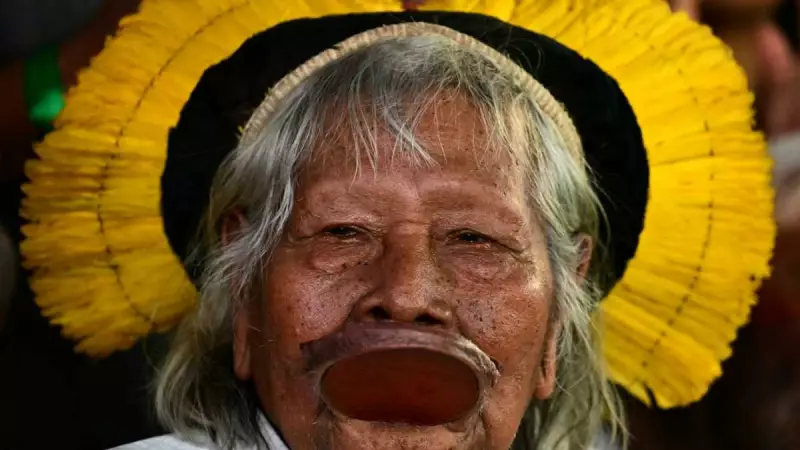
The nonagenarian chief of the Kayapo people made this declaration on Wednesday while attending the UN climate talks (COP30) in Belem, an Amazon city hosting the crucial environmental conference. Raoni, who gained international recognition in the 1980s through his anti-deforestation campaigns with British musician Sting, expressed his concerns to journalists after participating in the People's Summit opening ceremony.
'I support President Lula, but he must listen to us... He must respect us,' Raoni stated through a translator who interpreted his comments from the Kayapo language into Portuguese. The iconic leader, easily recognizable by his traditional large wooden lip plate, emphasized his intention to schedule a meeting with the president to address these pressing environmental issues directly.
Controversial Oil Project Sparks Tension
The confrontation stems from President Lula's open support for a controversial drilling project that began operational activities in October. This development followed oil giant Petrobras securing the necessary license after years of legal and environmental battles. The project's location near the sensitive ecosystem of the Amazon River mouth has drawn significant criticism from environmental groups and Indigenous communities.
Raoni's relationship with Lula carries historical significance, as the Indigenous leader was among the figures who symbolically presented Lula with the presidential sash during his 2023 inauguration for his third term as Brazil's president. This makes his current criticism particularly noteworthy and demonstrates the depth of his concern about the administration's environmental policies.
Broader Environmental Concerns
Beyond the immediate oil exploration controversy, Raoni highlighted additional government initiatives causing concern among Indigenous communities and environmental advocates. He specifically mentioned the Ferrograo railway project, an ambitious nearly 1,000-kilometer (620-mile) infrastructure plan designed to transport grain across Brazil, including through Amazon territories.
The Indigenous leader also addressed the ongoing challenge of deforestation, issuing a stark warning that 'if these bad actions continue, we will have problems.' This statement carries significant weight given Raoni's decades-long activism against rainforest destruction.
Despite these concerns, data shows that Amazon deforestation has actually declined steadily since Lula returned to power, marking a positive shift from the sharp increases recorded during the presidency of his far-right predecessor Jair Bolsonaro.
Lula's Complex Energy Position
President Lula has maintained a somewhat contradictory stance on fossil fuels and environmental protection. He has repeatedly expressed his belief that the world remains unprepared to completely transition away from fossil fuels. The Brazilian leader argues that expanding oil production in Brazil—currently the world's eighth largest producer—will generate necessary funds to finance the country's energy transition toward renewable sources.
However, in a notable statement during a leaders' summit preceding COP30, Lula acknowledged the unsustainable nature of current development models, warning that 'Earth can no longer sustain the development model based on the intensive use of fossil fuels.' This apparent contradiction between action and rhetoric has become a central point of criticism from environmental advocates and Indigenous leaders like Raoni.
The upcoming meeting between the Brazilian president and the respected Indigenous chief promises to be a significant moment in the ongoing balance between economic development and environmental preservation in the Amazon region.