
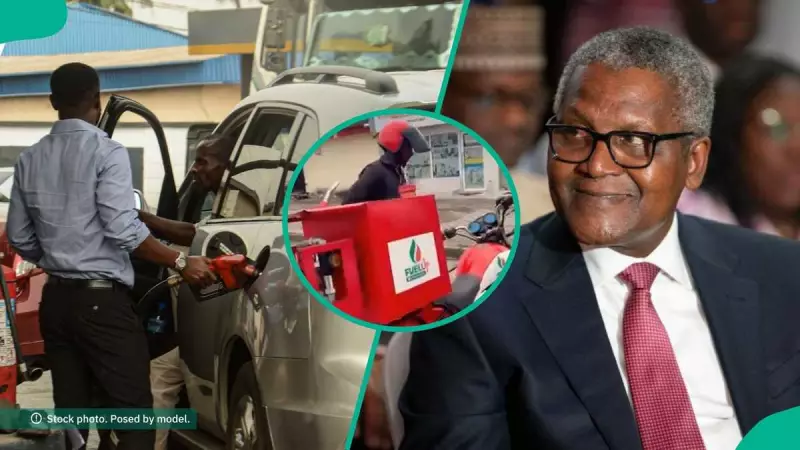
Dangote Group has issued a strong denial regarding a viral social media video claiming the company plans to launch a motorcycle-based fuel delivery service for individual consumers.
Official Statement Refutes Claims
The energy giant made its position clear through an official post on its X (formerly Twitter) account, stating simply but emphatically: "We are not in any way associated with this." The company's Chief Communication Officer, Anthony Chiejina, went further by directly labeling the promotional video as "Fake!"
The controversial video that sparked widespread discussion online showed a man using WhatsApp to order petrol, followed by a motorcycle rider arriving with a mini fuel dispenser to fill his vehicle. The clip was tagged with "FuelUp" branding and falsely claimed to be powered by Dangote Petroleum.
Genuine Distribution Plans Explained
While dismissing the viral bike delivery scheme, Dangote Petroleum Refinery clarified its actual distribution strategy. The company recently imported hundreds of Compressed Natural Gas (CNG)-powered trucks to expand its direct fuel distribution system launched in September.
The refinery plans to deploy more than 1,000 CNG-powered trucks in the first phase of its direct-to-station distribution scheme. This forms part of a massive investment exceeding N720 billion to deploy 4,000 CNG-powered trucks across Nigeria.
This landmark initiative is expected to generate significant savings for Nigerians, potentially exceeding N1.7 trillion annually by reducing pump prices and easing inflationary pressures.
Target Beneficiaries and Capacity
The company's legitimate distribution model focuses on supplying petroleum products directly to filling stations, industrial facilities, and other high-volume consumers. This approach eliminates transportation costs for marketers and large-scale buyers while enhancing profitability for over 42 million micro, small, and medium enterprises (MSMEs).
Dangote Refinery has reaffirmed its commitment to meeting Nigeria's daily consumption needs, which include:
- 45 million litres of petrol
- 15 million litres of diesel
- 5 million litres of aviation fuel
The clarification comes amid recent discussions about the refinery's capacity, with company officials maintaining they have sufficient capability to supply local markets while maintaining export provisions.




