
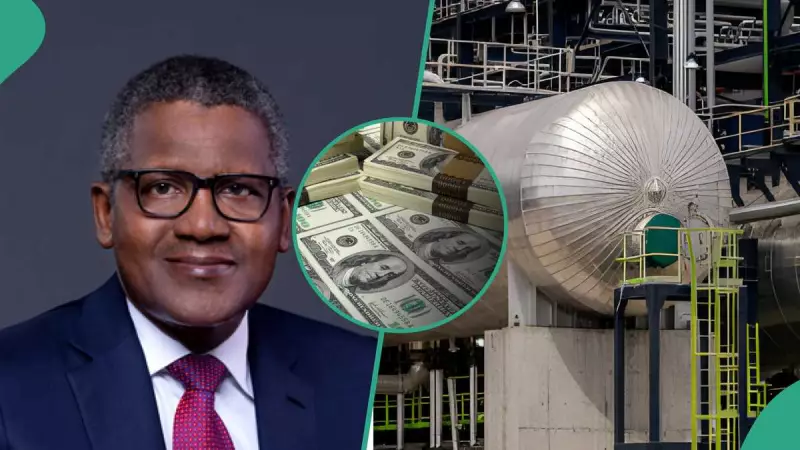
The Dangote Refinery is delivering substantial economic benefits to Nigeria, saving the nation more than N10 billion annually in foreign exchange through its local production of refined petroleum products. This revelation came from Sunday Esan, Senior General Manager of Corporate Communications at Dangote Industries Ltd., during his presentation at the 2025 Media Week of the Nigeria Union of Journalists in Lagos.
Massive Economic Impact on Nigeria
According to Esan, the refinery has significantly reduced Nigeria's dependence on imported fuel, with recent data showing a dramatic decrease in fuel import expenditures. Nigeria spent $2.6 billion on fuel imports during the first quarter of 2024, but this figure plummeted to $1.2 billion during the same period in 2025, representing a substantial 1.54% reduction in fuel imports.
The economic benefits extend far beyond foreign exchange savings. Esan emphasized that the refinery is contributing to GDP expansion, creating thousands of employment opportunities, and enhancing Nigeria's position as a regional energy hub. The facility has also played a crucial role in supporting the stability of the Naira while reinforcing the nation's energy supply chain.
Nearly two years after commencing operations, the refinery has sharply curtailed the volume of PMS and diesel imports, creating what Esan described as "measurable economic impact" across multiple sectors of the Nigerian economy.
Expansion Plans and Global Interest
The company is actively reviewing ambitious expansion plans that could see production capacity increase from the current 650,000 barrels per day to as much as 1.4 million barrels per day. This potential expansion comes amid growing international interest in the refinery's output, particularly from major global players.
International buyers including Saudi Aramco and several US-based firms have expressed strong interest in the refinery's products, with jet fuel emerging as a particularly sought-after commodity. This global attention underscores the refinery's competitive positioning in the international energy market.
The sheer scale of the refinery complex is staggering, occupying land nearly seven times the size of Victoria Island in Lagos. A complete tour of the facility requires approximately five hours by vehicle, highlighting the massive infrastructure investment.
Job Creation and Media Responsibility
The refinery's impact on employment has been substantial, with the recent acquisition of 4,000 CNG-powered trucks for product distribution directly creating no fewer than 24,000 jobs. This significant employment generation represents a major boost to Nigeria's labor market and economic development.
During his presentation, Esan also addressed the critical role of media in safeguarding national energy security. He encouraged journalists to report developments in the energy sector accurately and objectively, emphasizing the importance of firsthand knowledge and countering misinformation.
Esan urged media professionals to visit the refinery to gain proper understanding of its operations and stressed the need to protect this national asset from detractors. The media week event, themed "Unlocking Opportunities for Businesses in a Challenging Economy: The Role of the Media / Roadmaps to Energy Security in Nigeria," provided an ideal platform to examine how the refinery is reshaping Nigeria's energy landscape.
The Dangote Refinery continues to demonstrate its value as more than just a national asset, positioning Nigeria for greater energy independence and economic resilience in the years ahead.




