Housing and urban development stakeholders across Nigeria have intensified calls for comprehensive reforms to the Land Use Act, identifying it as a critical barrier to solving the country's affordable housing crisis and unlocking billions in dormant capital.
Urgent Need for Land Reform
The demands emerged during the 3rd International Conference and Fair on Land and Development, alongside the 7th Lateef Jakande Lecture, held in Lagos on December 1, 2025. Organized by the University of Lagos Centre for Housing and Sustainable Development, the ARUA Centre of Excellence in Urbanisation and Habitable Cities, and the Real Estate Developers Association of Nigeria (REDAN), the event gathered experts under the theme "Sustainable Land Development and Urban Infrastructure in Africa."
Mr Chudi Ubosi, Principal Partner at Ubosi Eleh & Company, set the discussion tone by highlighting how the Land Use Act has significantly slowed development across multiple sectors. He emphasized that government at all levels must act urgently to implement recommendations that would fast-track national development through improved stakeholder collaboration.
Digital Transformation and Economic Impact
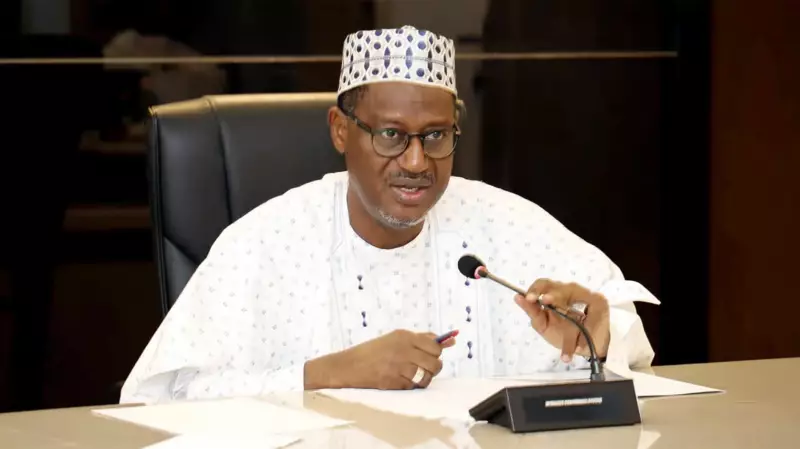
Housing and Urban Development Minister Arc. Ahmed Dangiwa declared that Nigeria's pathway to a trillion-dollar economy depends heavily on unlocking land value through structural reforms. Represented by Federal Mortgage Bank Managing Director Shehu Osidi, the minister warned that Africa's rapid urbanization—70% occurring in informal settlements—could escalate into a full-blown crisis without strengthened land governance.
Dangiwa announced a significant development: the new National Land Registry launched in Kano aims to harmonize titling processes, digitize land records, and unlock over $300 billion in dead capital across Nigerian states. He described the Land4Growth initiative as the most consequential land reform effort in recent history.
The minister directed state governments to commit 1-3% of their annual budgets to land administration, with at least half dedicated to titling, digitization, cadastral surveys, and dispute resolution. "When states invest correctly, citizens gain secure rights, investors trust the registry, mortgages become accessible, and governments generate sustainable revenue," he stated.
Housing Legacy and Future Challenges
UNILAG Vice Chancellor Professor Folasade Ogunsola warned that Africa, expected to absorb nearly 950 million new urban residents by 2050, must act swiftly to prevent infrastructure collapse and worsening inequality. She declared that "the era of fragmented planning is over" and called for fully synchronized research, policy, and industry action.
REDAN President HRM Oba Akintoye Adeoye paid tribute to former Lagos Governor Lateef Jakande's housing legacy, describing him as "a visionary whose social housing blueprint remains a reference point for modern governance." The current Jakande Lecture focused on "Delivering Sustainable Housing Infrastructure Finance in Nigeria," addressing rising construction costs and poor financing mechanisms.
Lagos State Commissioner for Housing Moruf Akinderu-Fatai noted that Jakande's administration delivered over 30,000 housing units using simple, functional designs for civil servants and low-income earners. He acknowledged that current economic challenges, rapid population growth, and expanding informal settlements have strained housing delivery efforts, particularly in Lagos.
"The real tribute we owe him is to build on his vision, not by replicating the past, but by applying its principles to a future where families no longer choose between affordability and dignity," Akinderu-Fatai concluded.