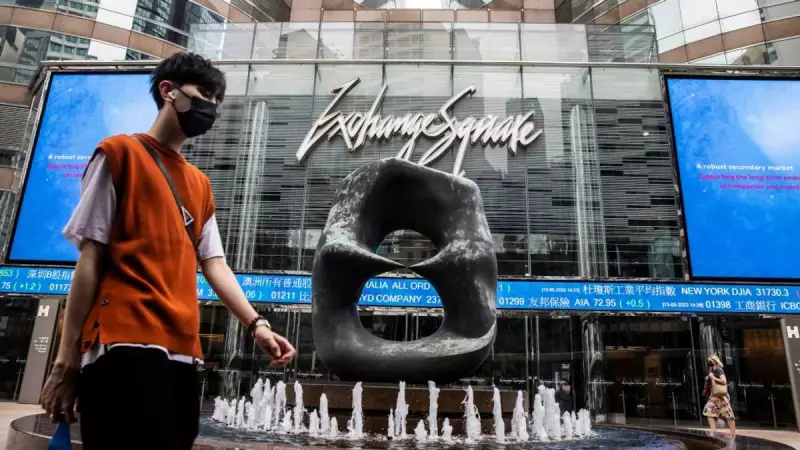
Markets across Asia experienced a welcome rebound on Wednesday, November 19, 2025, attempting to recover from a recent global sell-off driven by anxieties over an artificial intelligence (AI) bubble and the uncertain path for US interest rates.
Nvidia in the Spotlight
The financial world held its breath for the earnings report from chipmaking titan Nvidia, which recently became the first company to reach a $5 trillion valuation. Investors are nervous that any sign of weakness in its performance could be the trigger that pops the perceived AI bubble, following months of massive investment in the sector.
Stephen Innes of SPI Asset Management captured the mood, stating, "The AI complex, once the undisputed locomotive of 2025's rally, now sounds like an engine with sand in the gears." He described the current sentiment not as a panic, but as a market suddenly aware of its lofty heights and vulnerable position.
Widespread Bubble Concerns
Fears of an overinflated tech sector are not unfounded. A Bank of America survey revealed that more than half of fund managers believe AI stocks are already in a bubble. Furthermore, 45% identified this as the biggest potential threat, or 'tail risk,' to global markets, even surpassing concerns about inflation.
These worries were amplified by comments from Sundar Pichai, the head of Google's parent company Alphabet, who warned that a burst of the AI bubble would impact every company.
Market Performance and Key Data
After a difficult period, Asian markets found some stability, with performances mixed but generally positive. Key figures around 0230 GMT showed:
- Tokyo - Nikkei 225: UP 0.8 percent
- Hong Kong - Hang Seng Index: UP 0.1 percent
- Shanghai - Composite: UP 0.2 percent
- Gains were also seen in Sydney, Singapore, Taipei, and Manila.
- Losses were recorded in Seoul, Wellington, and Jakarta.
This week also brings the release of key US jobs data, which will be scrutinized for clues on the Federal Reserve's plans for interest rates. Investors have recently scaled back expectations for a third successive rate cut in December after several Fed officials, including Chair Jerome Powell, questioned the necessity while inflation remains high.
This recalibration has been a significant weight on market sentiment in recent sessions, contributing to the volatility that preceded Wednesday's tentative recovery in Asia.