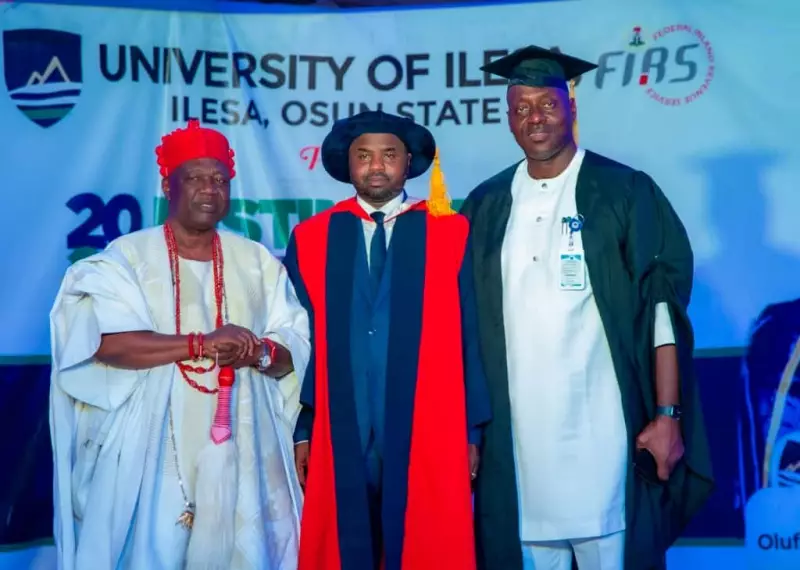
The Chairman of the Federal Inland Revenue Service (FIRS), Dr. Zacch Adedeji, has declared that Nigeria must urgently design a comprehensive tax system that is technology-driven and enjoys public trust to address the country's revenue challenges.
Revenue Diversification: A National Imperative
Speaking during the maiden Distinguished Lecture Series at the University of Ilesa in Osun State last Friday, Dr. Adedeji emphasized that revenue diversification is no longer merely a policy preference but has become a national imperative for Nigeria's economic survival.
The FIRS boss, who delivered his lecture on the topic "Economic Resilience in an Era of Dwindling Revenue," stressed that Nigeria's revenue problems extend beyond mere numbers to encompass structural issues, mindset challenges, and execution gaps.
Building Multiple Economic Engines
Dr. Adedeji outlined the critical need to restructure Nigeria's productive economic base away from its current heavy reliance on crude oil. He advocated for developing multiple growth engines across various sectors including agro-processing, the digital economy, the creative industry, and solid minerals development.
"We have made some gains, but resilience demands more than marginal improvements," Adedeji stated, according to a release by his Special Adviser on Media, Dare Adekanmbi. "It requires structural changes, bold reforms, and an unwavering commitment to fiscal sustainability."
The tax chief identified the first crucial pillar as generating more domestic revenue through fair, efficient, and sustainable means. He firmly stated that Nigeria cannot continue depending on volatile oil revenues or foreign loans to finance its development objectives.
Modernizing Nigeria's Tax System
Dr. Adedeji detailed FIRS's transformation into a strategic institution at the heart of Nigeria's fiscal sustainability agenda. He emphasized the need to build a tax system that accurately reflects the true size and structure of Nigeria's economy.
This modernization effort involves moving beyond taxing only large formal companies to capturing economic activities in the informal sector, digital economy, and among high-net-worth individuals who currently remain outside the tax net.
"To rebuild public trust in the tax system, we are modernizing not just our systems but also our mindset and culture towards greater professionalism, integrity and service orientation," Adedeji affirmed.
The FIRS chairman highlighted that the service is already leading this transformation through digital innovations including:
- TaxPro Max platform
- Electronic Tax Clearance Certificate system
- Advanced tax intelligence capabilities
These technological tools are automating compliance procedures and making tax administration smarter and more data-driven.
"Domestic revenue mobilization is not just a fiscal task, it is a nation-building strategy," Adedeji declared, positioning FIRS as a key institution helping Nigeria transition from economic vulnerability to strength.
He concluded with a firm commitment: "FIRS is not waiting for resilience to be handed to it. We are building it from the ground up. Through automation, legal reforms, multi-level collaboration, and institutional renewal, we are laying the fiscal foundation for a Nigeria that can weather storms, adapt to change and grow sustainably."
Earlier in the event, the Vice-Chancellor of the two-year-old University of Ilesa, Professor Taiwo Asaolu, explained that the institution aims to use such public lectures as platforms for discussing pressing global and national issues while seeking sustainable solutions to Nigeria's economic challenges.
The event was attended by traditional rulers including the Orangun of Oke-Ila, Oba Adedokun Abolarinwa, alongside academic staff and students of the university.