ASUU Challenges Federal Government's Funding Claims
The Academic Staff Union of Universities (ASUU), Bauchi zone, has strongly rejected the Federal Government's assertion that insufficient funds prevent it from meeting university salary demands. The union maintains that the real issues are lack of political will and misplaced priorities rather than financial constraints.
Revenue Statistics Tell Different Story
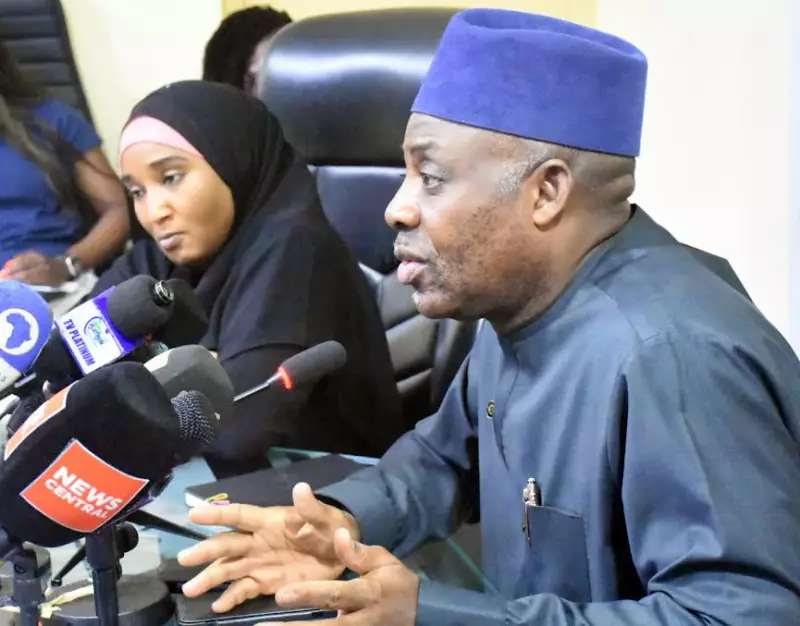
Professor Timothy Namu, Zonal Coordinator of ASUU's Bauchi zone, presented compelling financial data during a press briefing in Jos. He revealed that according to Federal Accounts Allocation Committee (FAAC) records, states received ₦3.92 trillion in 2022, which dramatically increased to ₦5.81 trillion in 2024 - representing a massive 62% growth.
Similarly, the Federal Government's allocation showed even more significant growth, moving from ₦3.42 trillion in 2022 to ₦4.65 trillion in 2024, marking an impressive 70% increase in revenue. Professor Namu emphasized that these figures clearly demonstrate adequate financial capacity to properly fund education.
Government's Response Deemed Insufficient
The union expressed disappointment with the government's proposed salary increase, describing it as a drop in the ocean that fails to address the brain drain crisis plaguing Nigerian universities. During the National Executive Council meeting held at Taraba State University in Jalingo from November 8th to 9th, 2025, ASUU thoroughly reviewed the government's response since the suspension of their warning strike.
Professor Namu stressed that with only one week remaining before the expiration of the four-week window given to the government, no substantial progress has been achieved in negotiations. The union had previously suspended a warning strike after an emergency meeting determined partial success in their objectives.
Call for Broader Intervention
ASUU has appealed to traditional rulers, thought leaders, student groups, civil society organizations, the Nigeria Labour Congress, and the National Assembly to intervene and pressure the government to take necessary actions. The union warns that without immediate and meaningful intervention, Nigerian universities face the risk of renewed industrial crises that could further disrupt academic activities.
The union maintains that the evidence clearly shows the government possesses sufficient resources to adequately fund education, but chooses to allocate funds elsewhere, demonstrating what ASUU characterizes as misplaced national priorities.