The global dance music phenomenon Tomorrowland has officially launched its first-ever event in China, marking a significant strategic move into the Asian market. The historic debut took place as an indoor festival in Shanghai, signaling a major vote of confidence in the country's burgeoning electronic dance music scene.
A Dream Realized for Chinese EDM Fans
The energy was electric as a DJ screamed, "Are you ready Shanghai?!" to a roaring crowd of thousands. This momentous occasion saw one of the world's most renowned music festivals plant its flag in Chinese territory for the first time. The event represents a calculated bet on the earning potential of China's young, urban middle class, even as consumer demand slackens in other sectors of the economy.
For dedicated fans like Mark, who attended wearing a bright yellow arrow headdress, the event was a dream come true. "For me, Tomorrowland is a dream," he shared, acknowledging that while EDM remains "relatively niche" in China, its popularity is surging. "Over the course of the last 10 years it's really flourished, and now I feel like everyone around me -- including my parents -- have all started to learn about EDM," he noted.
Strategic Move into a High-Growth Market
According to industry expert Cameron Sunkel from EDM.com, Tomorrowland is strategically targeting a demographic eager to premium-ise their partying experiences. He pointed out that compared to mature markets in Europe and America, where growth is incremental, "China, in my eyes, is where the demand curve is steepest for this type of experience."
A Tomorrowland spokeswoman reinforced this long-term vision, telling AFP they believe "strongly in China's long-term opportunities." She drew a parallel to Brazil, where the festival first arrived in 2015 as a niche market but has since cultivated a fast-growing community and incredible local talent.
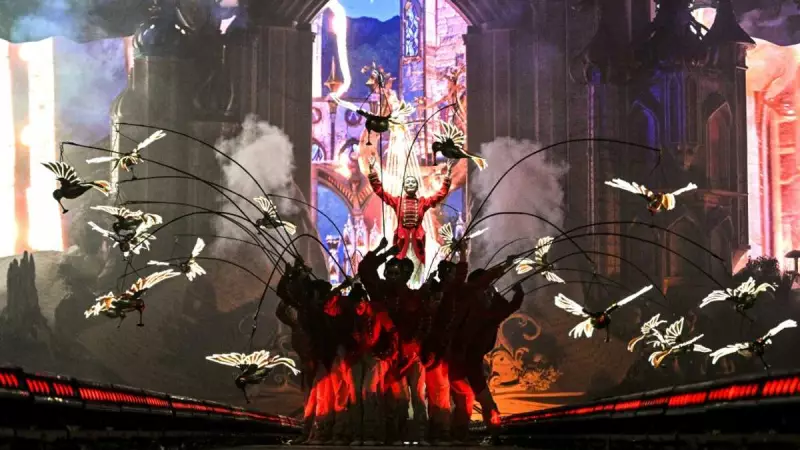
The Shanghai event, themed "The Magic of Tomorrowland," was a spectacle designed to impress. Attendees gasped upon entering the main hall, dominated by a castle-like stage set against a massive 374-square-metre video wall. The production featured over a thousand moving lights, 118 speakers, and dozens of laser, smoke, and bubble machines, all built in a purpose-built structure completed in just five months.
Emotional Consumption Defies Broader Economic Trends
This grand entry into China capitalizes on a notable trend among young Chinese consumers: a willingness to spend on emotional consumption. Despite broader concerns about slow domestic demand, this demographic is actively investing in experiences that make them feel good.
The data supports this shift. In 2024, ticket revenues from large- and medium-sized concerts and festivals in China grew by a staggering 66.5 percent to almost $4.2 billion. Tomorrowland is not the only international player to notice; major festivals like Ultra and Creamfields have also launched Chinese editions.
The Shanghai event, however, was a tightly managed affair. With a capacity of 10,000 people, it was intimate compared to the 400,000-strong gathering in Boom, Belgium. A visible security presence was noted, and the final act—global star Dimitri Vegas joined by Chinese rapper Masiwei—wrapped up promptly at 10 p.m. Some European attendees were also surprised to find a bar system limiting individuals to just two alcoholic drinks for the entire event.
Organizers, including local partners Hero Esports and INS Land, remained tight-lipped about the costs involved. Clinton Lau, CEO of the event for Hero Esports, focused on the long-term educational mission. "We're excited for a long-term partnership so that we can educate the Chinese community on what EDM is... and just increase the bar for this whole industry," he told AFP. When asked about profitability for this inaugural year, Lau smiled, indicating that building a market takes time. "So we're starting here," he concluded, marking the beginning of a new chapter for electronic dance music in China.