SERAP Takes Legal Action Against National Assembly Leadership
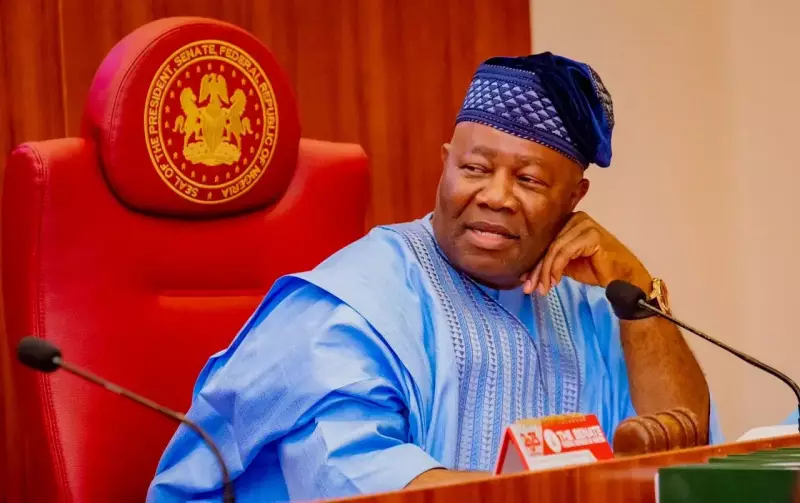
The Socio-Economic Rights and Accountability Project (SERAP) has initiated legal proceedings against Senate President Godswill Akpabio and House of Representatives Speaker Tajudeen Abbas concerning their alleged failure to provide explanations for ₦18.6 billion allocated for constructing the National Assembly Service Commission office complex.
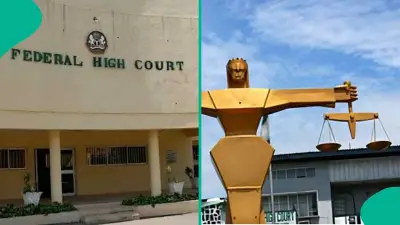
This significant legal action, filed at the Federal High Court in Abuja under case number FHC/ABJ/CS/2457/2025, also names the National Assembly Service Commission as a respondent. The lawsuit targets Akpabio and Abbas both individually and as representatives of all National Assembly members.
Auditor-General's Report Reveals Financial Irregularities
SERAP's legal move follows disturbing revelations in the 2022 annual report from the Auditor-General of the Federation, published on September 9, 2025. The audit report indicates that funds designated for the construction project might have been misdirected, including payments to what the auditor characterized as an "unknown" or "fictitious" construction company.
The organization is seeking a court order of mandamus to compel Akpabio, Abbas, and the NASC to disclose:
- The current status and location of the ₦18.6 billion
- The identity of the contractor that received the payments
- All related procurement documentation
SERAP demands access to comprehensive procurement records, including assessment reports, bid advertisements, quotations, contract documents, tender board meeting minutes, and Federal Executive Council approvals.
Systemic Failures in Contract Award Process
According to the auditor-general's findings, the NASC transferred over ₦11.6 billion to a construction company on August 11, 2020 for a 24-month contract to build the commission's complex. However, investigations revealed the contract was allegedly inflated by more than ₦6.9 billion.
Additional payments were reportedly made on November 29, 2023 for converting a roof garden into office space. The audit uncovered multiple procedural violations in the contract award process:
- No Bill of Quantity prepared for contract upward review
- Absence of needs assessment and newspaper advertisements
- No proper bidding process or contract agreements
- Missing Federal Executive Council approval
- No Bureau of Public Procurement "Certificate of No Objection"
The auditor-general expressed serious concerns that the ₦18.6 billion in public funds might have been diverted, misappropriated, or stolen, demanding full accountability for the missing resources.
Constitutional and International Obligations
SERAP contends that the alleged fund diversion breaches public trust, violates the 1999 Nigerian Constitution, and contravenes Nigeria's international anti-corruption commitments. The organization emphasizes that Nigerians have the fundamental right to know how their tax money is being spent and who received these substantial payments.
The lawsuit argues that compelling National Assembly leadership to account for the funds would strengthen institutional integrity and rebuild public confidence. SERAP maintains that the National Assembly should exemplify transparency, accountability, and rule of law principles it is constitutionally mandated to uphold.
The organization cites multiple constitutional provisions, including:
- Section 15(5) requiring public institutions to abolish corrupt practices
- Section 13 imposing responsibility to apply constitutional provisions
- Section 16(1) obligating efficient resource management for national prosperity
SERAP also references Nigeria's binding commitments under the UN Convention against Corruption, particularly Articles 5 and 9, which mandate proper management of public affairs and funds.
Broader Implications for National Development
The case highlights ongoing challenges in Nigeria's public financial management systems. SERAP argues that corruption disproportionately affects poor and vulnerable Nigerians, forcing them to bear additional costs for essential services like healthcare and education.
Corruption allegations continue to undermine economic development, violate social justice principles, and erode trust in public institutions. The organization stresses that accountability is crucial for reducing corruption's economic and social impacts and ensuring public resources serve the common good.
No hearing date has been scheduled for the lawsuit yet. The outcome of this case could set significant precedents for transparency and accountability in Nigeria's governance systems, particularly regarding the National Assembly's oversight of public funds.