
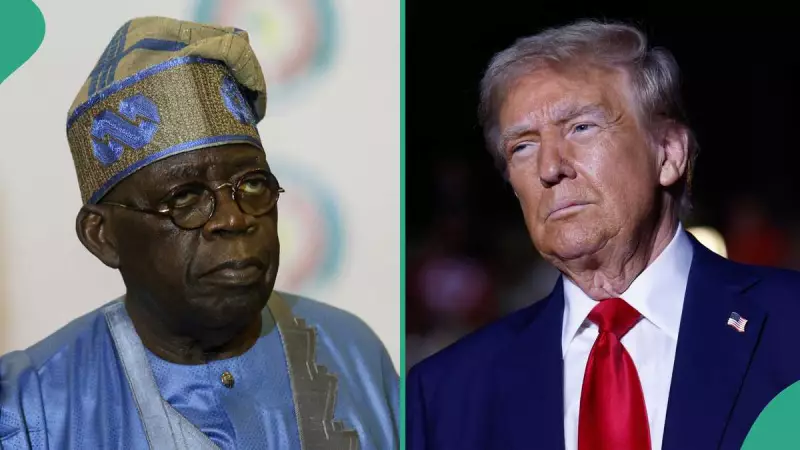
President Bola Tinubu has been called upon to implement three critical measures in response to United States President Donald Trump's controversial allegation of Christian genocide in Nigeria. The urgent recommendation comes as tensions escalate between both nations following Trump's threatening statements.
Three-Pronged Approach to Address US Allegations
Political commentator Olajumoke Shaqiru Victor outlined the necessary steps during an exclusive interview with Legit.ng. Victor emphasized that the Nigerian government should not perceive Trump's accusations as hostile but rather as an indication that Nigeria's security challenges have attracted global attention.
The three primary actions recommended include strengthening Nigeria's policies on equality and justice, ensuring protection for all religious groups across the country, and initiating diplomatic engagement with the United States to address what Victor described as "exaggerated or inaccurate claims."
Background of Trump's Controversial Statement
The situation developed after President Trump threatened military action against Nigeria under the pretext of defending Christians. This declaration has drawn widespread condemnation from various quarters. However, recent investigations reveal that Trump's position was significantly influenced by American policymakers' hardline stance toward Nigeria.
A document from the United States Department of Justice uncovered that pro-Biafra advocacy groups played a crucial role in shaping the American policymakers' position. The disclosure showed how diaspora organizations' persistent pressure led to Trump designating Nigeria as a "country of particular concern."
The campaign originated from the United States of Biafra, a coalition comprising the Biafra De Facto Government in the Homeland and the Biafra Republic Government in Exile. According to the official document, these groups were required to register under the Foreign Agents Registration Act due to their substantial influence on US policy decisions.
Potential Impact on Nigeria's International Standing
Victor expressed concern about the potential consequences of Trump's allegations, noting that while the federal government has officially rejected the claims, the designation could significantly affect Nigeria's foreign policy and international aid inflows.
"The American decision to list Nigeria as a 'country of particular concern' signals that the US believes Nigeria is not doing enough to protect religious freedom and prevent attacks on worshippers and religious communities," Victor explained.
He further emphasized that "the listing can still affect foreign relations, international aid, and how the world views Nigeria's human-rights record" despite the government's rejection of the allegations.
Victor advised that instead of treating the situation as hostility, Nigeria should seize the opportunity to strengthen internal policies concerning equality, justice, and protection of all religious groups while simultaneously engaging the US diplomatically to correct any misinformation.
The political analyst's recommendations come at a crucial time when Nigeria's international reputation and bilateral relations with the United States face significant challenges due to these allegations.




