
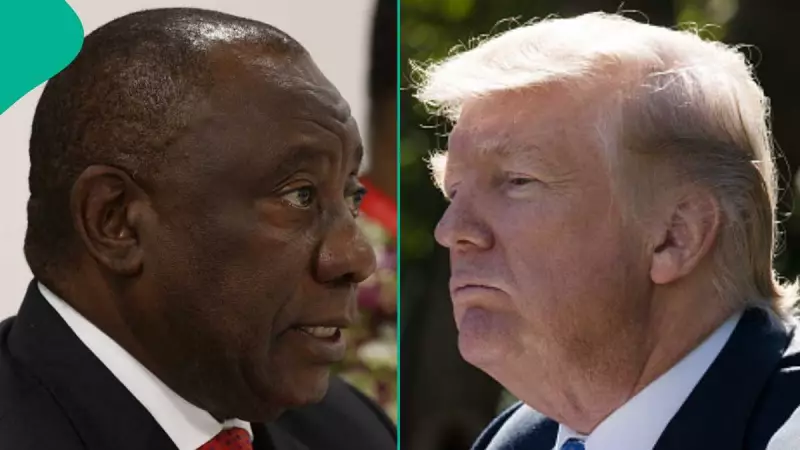
United States President Donald Trump has publicly explained his administration's controversial decision to skip the G20 summit held in South Africa, citing serious human rights concerns as the primary reason for the diplomatic absence.
Trump's Accusations Against South African Government
In a strongly worded statement, President Trump accused the South African government of failing to address what he described as horrific human rights abuses against Afrikaners and other descendants of Dutch, French, and German settlers. The American president made these declarations through his official X handle, formerly known as Twitter, on November 29, 2025.
Trump specifically claimed that white people are being killed in South Africa and that their farms are being randomly seized without proper legal process. He characterized these alleged actions as nothing short of genocide, marking a significant escalation in the diplomatic rhetoric between the two nations.
Consequences and Retaliatory Measures
The American president announced concrete retaliatory measures against South Africa in response to these alleged human rights violations. South Africa will not receive an invitation to the 2026 G20 summit, which the United States plans to host in Miami, Florida.
Furthermore, Trump declared that the United States government will immediately stop all payments and subsidies to the South African government. The president justified these severe measures by stating that South Africa has demonstrated to the world that it is not worthy of membership in international forums.
Broader Implications for International Relations
This development represents a significant shift in United States foreign policy toward South Africa and could have far-reaching consequences for diplomatic relations between the two countries. The decision to boycott such an important international gathering as the G20 summit underscores the seriousness with which the Trump administration views the alleged human rights situation in South Africa.
The announcement comes amid ongoing international discussions about land reform and racial tensions in South Africa, though the characterization of these issues as genocide represents a new level of international attention to the matter.




