Governor Francis Nwifuru of Ebonyi State has unveiled an ambitious economic blueprint for 2026, presenting a record-breaking appropriation bill that heavily relies on federal allocations while pushing for massive infrastructural development.
Record-Breaking Budget Presentation
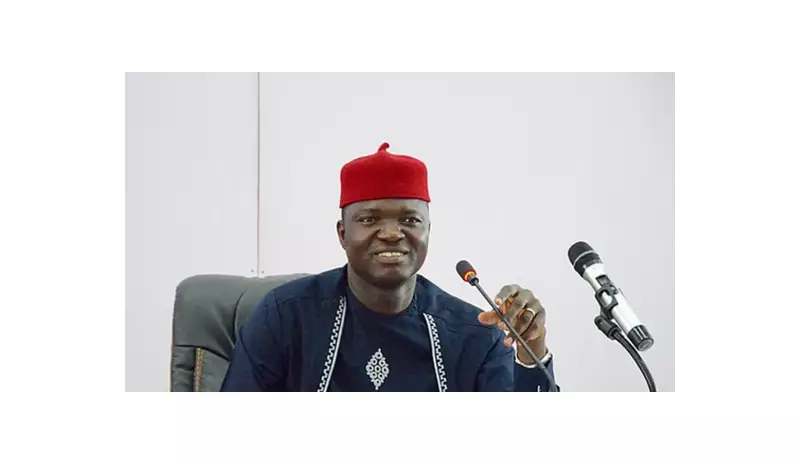
During Tuesday's session at the State House of Assembly in Nkaliki, Governor Nwifuru presented what he termed the "Budget of Actualisation and Hope" with a total value of N884.86 billion - the largest financial plan in Ebonyi's history. The governor revealed that the state expects to receive N469.9 billion from the Federation Account Allocation Committee, representing 53.11% of the total proposed revenue for the 2026 fiscal year.
"Our commitment is to lift Ebonyi higher and ensure that every citizen feels the impact of government," Nwifuru declared before the lawmakers in the Hallow Chambers.
Aggressive Capital Expenditure Strategy
In a bold move signaling the administration's development priorities, the governor announced that N749.49 billion, representing an unprecedented 84.7% of the total budget, has been allocated to capital projects. This aggressive capital spending strategy is designed to accelerate economic growth, modernize critical infrastructure, and position Ebonyi as a leading investment destination in Southeast Nigeria.
The budget breakdown shows additional revenue streams including N48.77 billion from tax revenue and N17.14 billion from domestic grants covering education funds, healthcare programs, and federal palliative support. A substantial N332 billion is expected from Capital Development Fund receipts, including World Bank-assisted programs such as SPIN, RAAMP, LPRES, NG-CARES, SABER, IFAD, and NEWMAP.
Pillars of Economic Transformation
Governor Nwifuru outlined an ambitious economic plan anchored on the People's Charter of Needs, with infrastructure acceleration as a key component. Major projects highlighted include the VANCO Tunnel and Flyover, the Nwofe and Nwezenyi Flyovers, alongside extensive township and rural road networks.
On industrialization, the administration will continue work on the Ebonyi Industrial City, a proposed state-owned cement factory, and the reactivated Waste-to-Wealth Plant, all targeting manufacturing growth and job creation.
The agricultural transformation agenda includes support for mechanized farming, distribution of modern farm equipment, revival of the Nkaliki Hatchery, and development of a large-scale feed mill to strengthen agricultural value chains.
Water and public utilities will see the reactivation of major water schemes including Oferekpe, Ezillo, and Iboko to expand potable water access and support industrial activities.
Human capital development will continue through investment in new universities, massive scholarship programs, free maternal healthcare, and empowerment initiatives that have already benefited over 5,000 citizens.
Nwifuru assured the Assembly and residents that the 2026 budget was crafted to translate promises into measurable results. "With discipline, determination, and your continued legislative support, this budget will guarantee industrialization, economic growth, and a better standard of living," he stated.
The governor urged the Assembly to give the Appropriation Bill expeditious consideration to sustain the state's development momentum. The bill has already passed first and second readings.
In his response, Speaker of the Ebonyi State House of Assembly, Chief Moses Ije Odunwa, commended the governor for significant progress in infrastructure, education, healthcare, and rural development. He assured that the House would thoroughly scrutinize the new budget to ensure it reflects the needs of Ebonyi citizens while congratulating the governor on his recent national appointment.