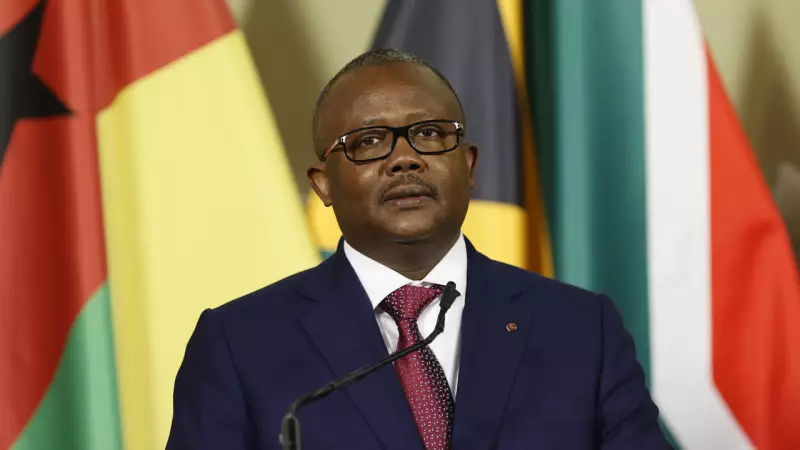
Guinea-Bissau has been plunged into political turmoil after President Umaro Sissoco Embalo fled to neighboring Senegal following a military takeover that disrupted the announcement of election results. The coup represents the latest in a series of power grabs across Africa and has drawn international condemnation.
Military Seizes Power Amid Election Controversy
The military intervention occurred on Wednesday, just one day before authorities were scheduled to announce provisional results from Sunday's presidential and parliamentary elections. General Horta N'Tam, the army chief of staff, has been designated as the country's new leader for a one-year period.
During a press conference surrounded by heavily armed soldiers, General N'Tam declared that the military had acted to block operations that threatened Guinea-Bissau's democracy. He stated that evidence had justified their intervention and emphasized that necessary measures required everyone's participation.
The capital city of Bissau came to a standstill following the coup, with most shops and markets closed and soldiers patrolling the streets. The new military leadership banned all media programming and outlawed protests, though they later lifted the nationwide curfew and ordered the reopening of markets, schools, and private institutions.
Opposition Alleges Coup Was Staged
Opposition candidate Fernando Dias da Costa told AFP that he believes he won Sunday's election with approximately 52 percent of the vote. In a surprising allegation, Dias claimed there wasn't a genuine coup but rather an outcome organized by President Embalo to prevent him from taking office.
Dias revealed that he escaped from his campaign headquarters when armed men came to arrest him on Wednesday. Meanwhile, leading opposition figure Domingos Simoes Pereira, who had been barred by the supreme court from standing in the election, was arrested during the military intervention.
Researchers interviewed by AFP noted that unverified preliminary results circulating before the coup showed opposition candidate Dias as the election winner. One West African researcher, speaking anonymously, suggested this could be an ideal scenario for Embalo, who might be released following negotiations and potentially reposition himself for future elections.
International Response and Regional Implications
The coup has drawn swift international condemnation. UN Secretary-General Antonio Guterres described the military takeover as an unacceptable violation of democratic principles and called for the immediate and unconditional restoration of constitutional order.
The West African regional bloc ECOWAS has suspended Guinea-Bissau from its decision-making bodies until constitutional order is restored. The African Union has also condemned the coup, while the European Union urged a swift return to constitutional order and the resumption of the electoral process.
This military takeover marks Africa's tenth coup in five years, following similar power grabs in Mali, Guinea, Sudan, Burkina Faso, Niger, Gabon, and most recently, Madagascar. Guinea-Bissau has experienced four coups since gaining independence from Portugal in 1974, with election results frequently contested throughout its history.
As the situation develops, the international community watches closely to see how this latest political crisis in the volatile West African nation will unfold, with many citizens expressing frustration at the recurring instability that continues to hinder the country's progress.