US Mission Sounds Alarm on Rising Fake Job and Visa Scams
The United States Mission in Nigeria has issued a strong warning to Nigerian citizens about a dangerous wave of fraud. Scammers are pretending to be recruitment agents or visa consultants, offering American jobs, work visas, or guaranteed interview slots in exchange for payment.
How the Elaborate Scams Operate
In a statement on its official X account, the US Mission clarified its procedures to help the public identify fraud. The US Embassy will NOT call or email to request visa payments through unauthorised channels like mobile transfers or cryptocurrency. It also will not guarantee visas or faster processing for a fee, and all application forms remain free on official government websites.
The mission provided a crucial tip for verification: "Always verify websites. Official US Government websites end in .gov. If it doesn't, it's likely a scam."
This alert comes as Nigeria's Economic and Financial Crimes Commission (EFCC) revealed shocking statistics. In 2025 alone, the agency has received more than 1,200 complaints about fake US visas and job offers. The total estimated loss for victims is a staggering ₦4.7 billion (approximately £2.2 million).
Sophisticated Fraud and Law Enforcement Action
These criminal operations are often run on social media platforms, WhatsApp groups, and through fraudulent websites that cleverly mimic the official US Department of State portal. Victims are typically asked to pay various fees—such as processing, reservation, or consultancy charges—ranging from $500 to $5,000.
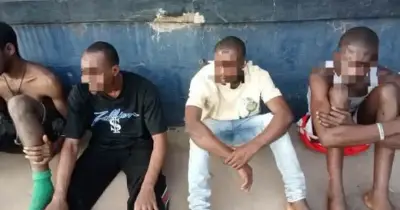
In a significant crackdown, police in Abuja arrested six suspects in October. They were accused of running a syndicate that defrauded over 300 people by promising H-1B and EB-3 visas linked to non-existent employers in Texas and California.
US consular officials in Lagos and Abuja report that the forged documents, including fake appointment confirmations and DS-160 barcode pages, are becoming increasingly sophisticated. They often use stolen logos and genuine-looking email addresses with variations of @state.gov.
Travel agents and lawyers in Lagos confirm that demand for US visas has surged since the Biden administration expanded certain visa categories earlier this year. This increased demand has created a fertile ground for fraudsters to exploit hopeful applicants.
Legitimate visa interviews are scheduled ONLY through the official websites: https://ais.usvisa-info.com or https://ceac.state.gov. The US Mission reiterates that no third party can influence visa processing times or outcomes.
Nigerians remain among the top ten nationalities applying for US visas from sub-Saharan Africa, with over 185,000 applications processed in the 2024 fiscal year.
Anyone who believes they have been targeted by visa fraud is urged to report the incident to the US Embassy via [email protected] or to the EFCC.