Former Tinubu Ally Sounds Alarm on Security Directive
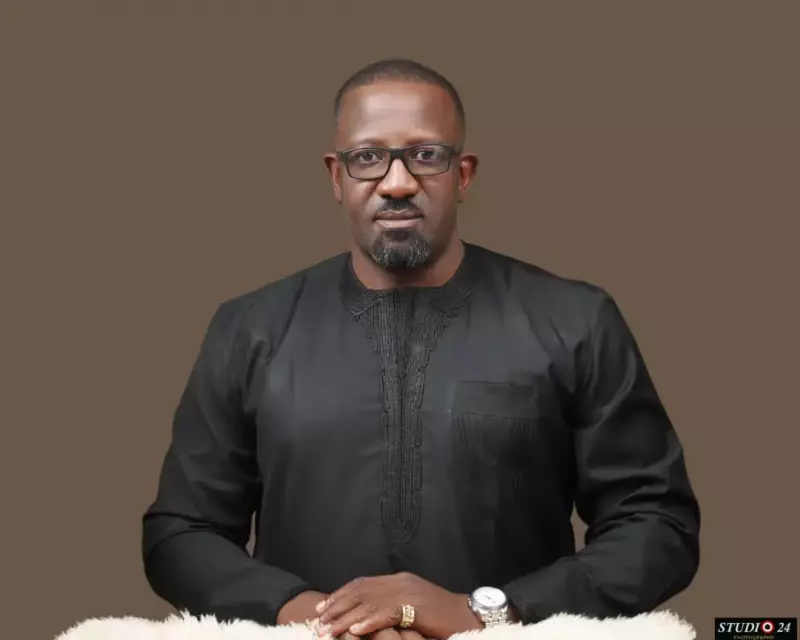
Denge Josef Onoh, the Chairman of the Forum of Former Members of Enugu State House of Assembly and former Southeast spokesman to President Bola Ahmed Tinubu, has issued a stark warning about the potential consequences of the president's directive to withdraw police protection from VIPs.
Speaking to journalists in Kano State, Onoh expressed serious concerns that this well-intentioned policy could negatively impact the country and promote increased criminal activity at a time when Nigeria faces escalating security challenges.
Security Expert Draws from Governance Experience
Onoh brings substantial credibility to his warnings, drawing from his extensive experience in governance and security matters. He served as a member of the Enugu State House of Assembly from 2003 to 2007, where he chaired the Committee on Finance and Appropriation.
His security expertise was further developed during his tenure as Senior Special Adviser on Domestic Matters, Security, and Special Projects under former Governor Ifeanyi Ugwuanyi. He later served as commissioner in the Office of the Governor and Executive Chairman of the Enugu Capital Territory Development Authority (ECTDA).
"It was in those positions that I witnessed firsthand the intricate interplay between governance, security, and public welfare," Onoh stated, specifically referencing his experiences during the EndSARS crisis, IPOB sit-at-home protests, and unknown gunmen menace in the Southeast region.
Stark Crime Statistics Reveal Growing Threat
The former presidential spokesman presented alarming data to support his position. He revealed that in November 2025 alone, Nigeria has experienced a surge in violent abductions and attacks that have devastated communities.
More concerning are the annual statistics covering July 2024 to June 2025, which show Nigeria recorded 4,722 kidnappings in 997 separate incidents. These criminal activities resulted in 762 deaths, with ransom demands totaling a staggering 48 billion naira - creating what Onoh described as a "structured, profit-driven criminal industry."
Against this backdrop of escalating threats, President Tinubu's directive to withdraw 11,566 police personnel from VIP protection duties - redeploying them to core public security roles while shifting elite safeguards to the Nigeria Security and Civil Defence Corps (NSCDC) - requires urgent reconsideration according to Onoh.
Proposed Balanced Approach to Security
While commending President Tinubu's vision to bolster community policing and his approval for recruiting 30,000 new police officers, Onoh warned that a blanket withdrawal of VIP protection could have dangerous consequences.
"A blanket withdrawal at this juncture could inadvertently heighten risks for political office holders and VIPs, transforming them into high-profile targets in an already volatile environment," he cautioned.
With kidnappers viewing abductions as lucrative enterprises - demanding up to 100 million naira per victim in recent cases - unprotected VIPs would become prime targets. This could spike incident rates and overwhelm Nigeria's already strained security apparatus.
Onoh proposed a calibrated approach: limit police protection for all VIPs and political office holders to a minimum of two officers for low-risk individuals and a maximum of four for high-risk ones, based on threat assessments by the Inspector-General of Police.
This restrained allocation - far below current excesses where up to 100,000 officers guard elites - would free thousands for frontline duties while preserving essential safeguards. Onoh emphasized that this policy echoes global best practices, where VIP protection remains integral to national stability.
Legal and International Precedents Support VIP Protection
Onoh highlighted that Nigerian law unequivocally supports targeted VIP protection as a state responsibility. The Police Act 2020 empowers the Nigeria Police Force to provide 'specialised services' for protection of lives and property, including orderlies for verified needs.
Furthermore, Section 215(3) of the 1999 Constitution (as amended) grants the President authority to direct the IGP on internal security matters, including protective deployments, underscoring that such measures are essential for maintaining order.
Internationally, robust VIP protection remains a cornerstone of security frameworks. Onoh cited several examples:
- South Africa's VIP Protection Unit (VIPU) provides static and transit safeguards while freeing resources for community policing
- The United States Secret Service's protective details for the president and candidates ensure seamless operations
- The United Kingdom's Metropolitan Police Royalty and Specialist Protection Command deploys calibrated teams for high-profile figures
- Kenya's 2019 reforms banned state personnel for private errands while retaining police for verified VIP threats
"These nations demonstrate that limited, professional VIP protection enhances, rather than hinders, overall security," Onoh stated.
Call for Comprehensive Security Reform
Beyond the immediate VIP protection issue, Onoh urged a broader focus on security force empowerment. He called for enhanced welfare packages - competitive salaries, housing allowances, and health benefits - coupled with tax exemptions on security personnel's emoluments to boost morale, retention, and recruitment.
"Imagine a motivated force, unburdened by financial woes, patrolling our forests and villages with renewed vigour," he envisioned. "This holistic strategy would honour the President's vision while mitigating risks, ensuring that Nigeria's security architecture protects all—from the schoolchild in Niger and all states in Nigeria to the statesman in Abuja."
Onoh concluded with a direct appeal: "Mr President, I implore you: Reconsider and refine this directive. Let us build a safer Nigeria together, where hope is renewed not just in policy, but in the lives it preserves. The people are watching, and their trust is our greatest asset."