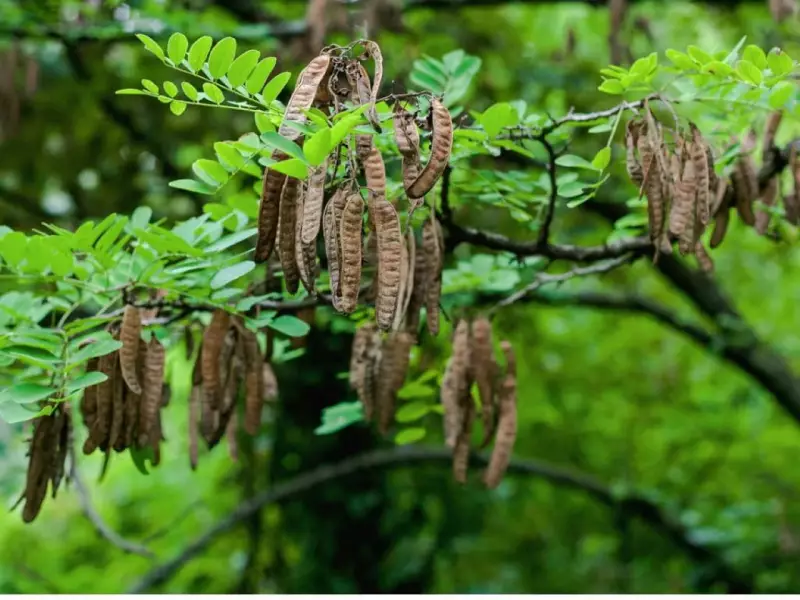
Sokoto's Vanishing Heritage: The African Locust Tree Crisis
In Gwadoddi Village, Rabbah Council of Sokoto State, 89-year-old Malam Gwadoddi Shehu remembers better days when African locust trees dominated the landscape. The elderly farmer recalls owning thirteen of these valuable trees, symbols of economic prosperity and family pride. Today, he watches helplessly as this natural heritage disappears before his eyes.
Dual Threats: Flooding and Military Operations
The African locust bean tree, locally known as Dawadawa, faces extinction in Sokoto communities due to two primary factors: excessive flooding and military counter-insurgency operations. According to local farmers, both natural and human-induced factors are rapidly depleting these economically vital trees.
Shuaibu Shehu, son of the octogenarian farmer, explains the cultural and economic significance of these trees. "When we were growing up, we were happy to see our parents earning from these trees," he recalls. "Our whole day was spent plucking and drying the beans, which we gathered in bags to sell. We used the proceeds to fund our education."

Economic and Nutritional Impact
The disappearance of African locust trees has created significant economic and nutritional challenges for local communities. Investigation reveals that:
- The price of dried locust beans has increased dramatically to N3,500 per kilogram from the previous N2,800
- A 100kg bag now costs between N75,000 to N80,000
- Many households now rely on manufactured seasoning cubes instead of the natural, protein-rich alternative
Alhaji Aminu, a dealer in African locust beans, confirms the market changes. "The market is brisk," he states, noting that much of the produce now comes from Niger State due to local shortages.
Military Denials and Civilian Realities
While local farmers and vigilante members report that military operations involving forest burning have destroyed numerous trees, the Nigerian Army denies these claims. Lieutenant Colonel Olaniyi Joseph Osoba, spokesman for the 8 Division, states that such actions would be "counterintuitive to our core mission."
However, Isah Umar Gwadoddi, a local vigilante member assisting military operations, presents a different perspective. "There have been burnings of forests perceived to be hideouts of armed bandits," he explains. "In those areas, we have lots of economic species like African locust trees and baobab. Most are now inaccessible to farmers."
Environmental and Health Consequences
Professor Adamu Aliero, National President of the Botanical Society of Nigeria, confirms that tree species in Sokoto face endangerment. "Flooding is not conducive for locust trees because when attacked by fungus or bacteria, even the biggest trees can dry up suddenly," he notes.
The health implications are equally concerning. Hajiya Salamatu Shuni, a Sokoto housewife, highlights the antioxidant properties of locust beans and their traditional use in treating hypertension and eye problems. Environmental activist Shehu Aliyu adds that "the African locust is a multipurpose tree with seeds, pods, fruit pulp, and leaves that are edible."
Climate Change Amplifies Crisis
Weather patterns in Sokoto have shifted dramatically since 2011, with flood-prone areas emerging where they previously didn't exist. A recent study shows that rainfall in northern Nigeria increased by approximately 63% between 2007 and 2023.
The 2024 flooding season proved particularly devastating, affecting 34 states nationwide and resulting in:
- 603 deaths
- 1.3 million displaced persons
- Over 200,000 destroyed homes
Professor Abubakar Gwaram Bello, an agroforestry expert at Usmanu Danfodiyo University, warns that unless ongoing insecurity is addressed promptly through military collaboration with communities and forestry researchers, many local tree species will remain at risk of extinction.
The crisis demonstrates how security challenges and climate change intersect to threaten both biodiversity and traditional livelihoods in northern Nigeria.