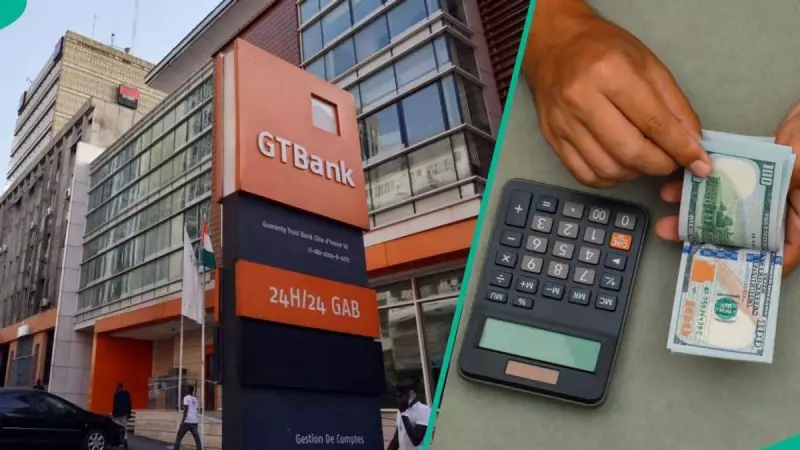
Guaranty Trust Bank has announced a significant increase in the international spending limit for naira cardholders, raising the quarterly cap from $1,000 to $6,000 effective November 11, 2025.
The bank notified customers through an official message on Monday, November 10, indicating that the new limit would be periodically reviewed in response to changing market conditions.
New Spending Limits and Exchange Rates
The bank's communication to customers clearly stated: "International payments on your GTBank Naira Card today, 11-11-2025, are N1,444. Please note that the dollar spending limit on your naira Card is now $6,000 per quarter. This rate is subject to change in line with prevailing market conditions."
This represents a substantial 500% increase from the previous limit of $1,000 per quarter that was established in July 2025 when Nigerian banks restored international card usage after months of suspension.
Concurrently, GTBank adjusted its foreign exchange rate for international card transactions to N1,444 per dollar on Tuesday, November 11, up from N1,442 recorded on Monday.
Banking Sector Comparison and Context
The banking sector has shown varying approaches to international transaction limits since restoring services earlier this year. While GTBank has implemented this significant increase, other institutions have maintained different structures.
First Bank, for instance, established a $500 monthly limit that permits ten international ATM withdrawals monthly, each attracting a N5,000 fee, while allowing up to twenty POS or web transactions without additional charges.
The restoration of international card usage in July 2025 came after months of suspension due to foreign exchange scarcity that had severely impacted cross-border payments for Nigerian card users.
Expert Analysis and Market Implications
Ayokunle Olubunmi, Head of Financial Institutions Ratings at Agusto & Co., provided crucial insight into the bank's decision. He clarified that this review was an internal bank decision rather than a directive from the Central Bank of Nigeria.
Olubunmi explained that individual banks assess their foreign currency positions independently and set transaction limits based on available liquidity. He noted that banks had voluntarily reinstated naira card international transactions after accumulating sufficient foreign exchange reserves to support such services.
This move by GTBank, along with similar adjustments by other financial institutions, signals renewed confidence in dollar supply and indicates greater stability in Nigeria's foreign exchange market after extended periods of volatility and scarcity.
Broader Economic Context and Reserves Growth
The increased spending limits coincide with Nigeria's improving economic indicators. Recent data reveals that Nigeria's external reserves have surged to $43.30 billion as of November 5, 2025, marking the highest level since October 11, 2018, when reserves stood at $43.34 billion.
This substantial increase provides the Central Bank of Nigeria with enhanced capacity to defend the naira amid ongoing exchange rate pressures. The reserve growth reflects sustained foreign exchange inflows and improved investor confidence following the government's fiscal and monetary reforms.
The combination of banking sector initiatives and strengthened economic fundamentals suggests a positive trajectory for Nigeria's foreign exchange stability and international payment capabilities.