
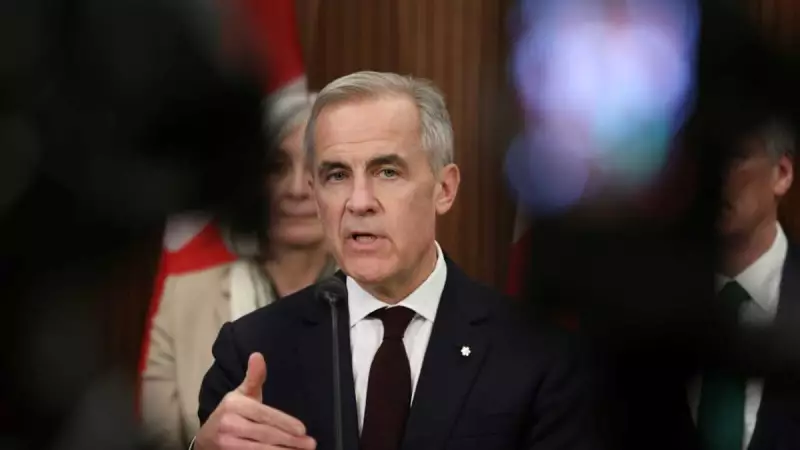
Canadian Prime Minister Mark Carney is confronting intense criticism for what opponents describe as a significant reversal in the nation's climate change policies. Since replacing former leader Justin Trudeau in March 2025, Carney has initiated a series of actions that have repositioned his Liberal Party's stance on environmental issues.
A Swift Policy Reversal
One of Carney's first major moves upon taking office was to scrap Trudeau's unpopular carbon tax on individuals. He then established a Major Projects Office, designed to fast-track initiatives he claims will bolster Canada's economic sovereignty. This office has prioritized mining and natural gas projects, drawing immediate concern from environmental advocates.
The most dramatic development occurred on Thursday, November 27, 2025, when Carney struck a deal with the conservative-led province of Alberta to advance a new oil pipeline and increase overall oil and gas production. "Canada and Alberta are striking a new partnership to build a stronger, more sustainable, and more independent Albertan and Canadian economy," Carney stated, adding his intention to make Canada an "energy superpower."
Political Fallout and Resignation
This agreement marked a clear departure from the policies that defined Trudeau's decade in power. The shift was welcomed by Alberta Premier Danielle Smith, who noted the federal government's tone had "done a 180." However, the deal triggered an immediate and significant resignation from within Carney's own cabinet.
Steven Guilbeault, Carney's minister and Trudeau's former environment minister, resigned just hours after the pipeline deal was signed. Guilbeault, a prominent environmental activist before entering politics, stated he joined government "to champion the fight against climate change" but felt key green policies he helped implement were now being "dismantled."
Economic Pressure and Climate Concerns
Supporters of Carney's new direction argue he is facing economic reality. They point to the profound disruptions caused by US President Donald Trump's trade war, which is punishing the Canadian economy. Tim McMillan, former president of the Canadian Association of Petroleum Producers, asserted that with cancelled projects and lower living standards over the past decade, Canada must leverage its strengths, with oil and gas at the top of that list.
Carney, a former central banker and UN climate finance envoy, has emphasized market-driven solutions. He defended the pipeline plan, suggesting it could be a win-win. He argued that increased oil exports to Asia would reduce Canada's economic dependence on the United States. Furthermore, the deal requires oil companies to pay a steep industrial carbon tax, with revenues potentially funding cleaner energy, while emissions are offset through carbon capture technology.
Despite these justifications, environmental groups are outraged. Conor Curtis of Sierra Club Canada labelled the situation an "erosion of climate policy," insisting that a new oil pipeline is unnecessary during a global transition to renewable energy. The controversy highlights the difficult balance between economic resilience and environmental commitments, a challenge sharply intensified by global trade pressures.




